Houston summers don’t give your air conditioner much room for error, which is why learning to prevent AC breakdowns is so critical. Between long stretches of heat, heavy humidity, afternoon thunderstorms, and nonstop demand, your AC system works hard from spring through fall to keep you comfortable.
It makes sense that the best time to prevent AC breakdowns in Houston is before your AC system is pushed to its limit. Whether you live in Bellaire, West University, Seabrook, Clear Lake, Fulshear, Katy, Sugar Land, or elsewhere around Greater Houston, a little preventive care can help you avoid the worst-case scenario: no cool air on a hot summer day.
Here are practical ways to help your air conditioner run better, last longer, and stay ready for Houston’s famous summer heat .
1. Schedule Preventive AC Maintenance Before Peak Summer Heat
A professional AC maintenance visit is one of the most reliable ways to catch small problems before they become expensive repairs. During a tune-up, a licensed HVAC technician can inspect electrical components, check refrigerant levels, test system performance, clean the outdoor condenser, and look for early warning signs of electrical or mechanical problems that require attention.
This matters all across Houston because our cooling season is long. Your AC may not just run in June, July, and August. It often gets a workout in April, May, September, and even October.
Preventive maintenance is especially helpful for homeowners who travel, have rental properties, care for young children or aging family members, or simply don’t want to gamble with comfort when temperatures climb.
ProTip: Think of AC maintenance like getting your car ready for a road trip. You’d rather spot the nail in the tire in the driveway than on the side of the Katy Freeway or Beltway 8.
2. How Often Should You Change Your AC Filter in Houston?
Dirty air filters are one of the easiest problems to prevent, but they can cause plenty of trouble if they’re not changed regularly. A clogged filter restricts airflow, which makes your AC work harder to move air through your home. That extra strain can lead to frozen coils, poor cooling, higher energy use, and unnecessary wear on electrical parts. We’ve seen badly clogged filters cause air conditioner breakdowns.
For many Houston-area homes, checking the filter once a month during cooling season is a smart habit. Homes with pets, kids, allergies, or construction nearby may need more frequent changes.
Don’t assume the “90-day” label applies to every home. In Katy, Fulshear, and Sugar Land, construction dust and new development can load up filters faster than expected.
ProTip: If you’re tired of changing one-inch filters all the time, ask about a thicker media filter which may last up to 6 months to a year, depending on your system, home, and filter type.
3. Why Does Your AC Drain Line Clog in Houston?
If you’ve lived in Houston very long, you have probably become very familiar with your AC drain line. It’s a frequent repair request that we receive.
The fact is: your AC does more than cool the air. It also removes moisture. That moisture drains through the condensate line. When the drain line gets clogged up with a mix of algae, sludge, dirt, or buildup, water can back up and trigger a float switch to turn the system off. If you don’t have a float switch, that water backup can leak around the unit or around your air conditioner, ceilings, or floors.
Condensate drain maintenance is especially important when Houston weather trends more humid than hot. On those muggy days when the AC runs a little less frequently, such as after a few days of thunderstorms, moisture can sit in the drain line longer. Those are the perfect conditions to allow gunk to build up.
This type of AC service and repair call can happen anywhere in the area because high humidity is part of daily life. If your AC suddenly shuts off but the thermostat looks normal, check for water near the indoor unit or a backed-up drain pan. A clogged drain line may be the culprit.
ProTip: If you’re unsure where to find your condensate drain pan or want to know how to maintain it if it’s a frequent issue, please ask. Our helpfulAC technicians will be glad to make sure you have a float switch and show you what to look for and what to do if you do get a clogged line.
4. Protect Your Outdoor Unit
Your outdoor condenser needs room to breathe. Shrubs, vines, and landscaping growing nearby can block airflow around the unit if they aren’t trimmed back. When airflow is restricted, the HVAC system has a harder time releasing heat.
Walk around the outdoor unit and make sure there’s clear space around it. Trim back plants, remove any debris, and avoid stacking patio furniture, fencing materials, or storage bins too close to the unit.
This is a small task that can make a real difference, especially in landscaped neighborhoods around Bellaire, West University, and Sugar Land.
ProTip: Hurricanes and windstorms are something Houstonians are intimately familiar with because they can and do damage to outdoor AC units. Making sure that patio furniture, toys, pots, and other supplies kept outdoors are properly stored and overhanging branches appropriately trimmed can save you a headache after a major storm.
5. Do Not Ignore Weak Airflow
A dirty filter, blocked return grille, duct issue, blower problem, dirty coil, or closed vents can cause weak airflow when the air conditioner is running. Whatever the cause, poor airflow makes it harder for your AC to cool evenly and can stress the system.
Check that furniture, rugs, and curtains aren’t blocking vents or returns. Also, avoid closing too many supply vents in unused rooms. It may seem like a money-saving trick, but it can throw off the system’s balance and create air pressure problems within your system.
ProTip: If one bedroom is always hot, especially upstairs, the answer may not be “turn the thermostat lower.” The fix may involve repairing an attic duct, checking insulation, or correcting azoning problem , such as a malfunctioning damper.
6. Watch for Short Cycling
Short cycling happens when your AC turns on and off too frequently. It can be caused by airflow restrictions, thermostat issues, electrical problems, refrigerant concerns, or an oversized system to name a few.
Short-cycling isn’t something to ignore. It can wear out AC components faster and make your home feel less comfortable, especially when humidity is high.
Homeowners in Houston’s older neighborhoods like Meyerland and West University may notice this after renovations, additions, or duct changes. Newer homes in Fulshear and Katy may see it with zoning or when certain electrical parts go out, such as a capacitor.
ProTip: If your AC runs for only a few minutes at a time, write down what you notice before calling. Does it happen during the hottest part of the day? After rain? Only upstairs? Those clues help us get to the cause faster.
7. Set Your Thermostat for Steady Comfort
Your thermostat settings can help reduce strain on your air conditioner. Avoid dramatic temperature swings, such as setting the AC very low when you get home or turning your system off during the hottest days. Your system won’t cool faster when it’s hot outside. It will just run longer.
A programmable or smart thermostat can help keep your home comfortable without overworking the system. Just make sure it’s installed properly and reading the temperature accurately.
For Houston humidity, comfort isn’t only about the number on the thermostat. If the house feels muggy even when the temperature looks right, your system may need service or it may need additional humidity control.
ProTip: If 74 degrees feels damp and uncomfortable, the issue may be humidity control. Some homes benefit from the installation of a whole-home dehumidifier in addition to their AC unit.
8. Listen, Look, and Smell for Early Warning Signs
Many air conditioners give warning signs before they break down, but not always. Call for service if you notice:
- Warm air from vents
- Unusual clanking noises
- Musty odors
- Water near the indoor unit
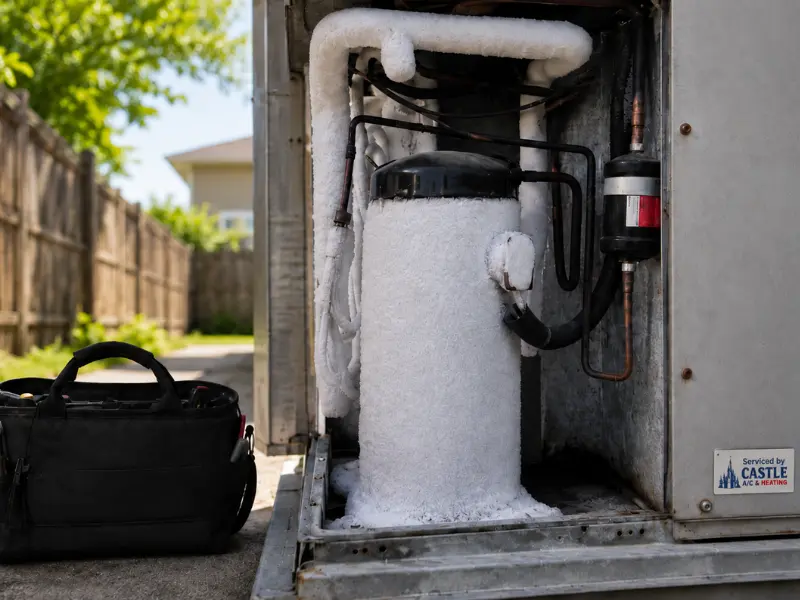
- Ice on refrigerant lines or coils
- Breakers tripping
- Higher indoor humidity
- A sudden jump in energy bills
- AC not turning on
Catching these signs early can help prevent a small repair from turning into a major failure. If you’re thinking there might be a problem, call as early in the week as you can for the best service and scheduling.
ProTip: When you call for service, let us know if you need a repair only or if you’d likeAC maintenance at the same time. This way we can allocate the right amount of time for your service visit.
9. Choose an AC Maintenance Plan or Book Individual Tune-Ups
Some homeowners prefer to schedule AC maintenance as needed. Others like the convenience of a maintenance plan, such as our Set It & Forget It Assurance Plan . Either option is better than waiting until the air conditioner stops working.
It always seems like the AC will stop working at the exact wrong time. For example, they happen right before a holiday weekend or before the plans you made to watch the Astros play.
An AC maintenance plan can make it easier to stay on schedule, give you priority service, and discounts on parts should you need them. Individual maintenance tune-ups in the spring and fall give you flexibility. The important thing is making care of your AC part of your home maintenance routine before Houston’s heat arrives in full force.
Ready to Help Your AC Beat the Heat?
Your home is your castle, and your air conditioner deserves a little royal treatment before Houston’s summer heat puts it to the test. Whether you need service or a replacement AC , we’re here for our Houston neighbors.
Since 1975, Castle A/C & Heating has been helping homeowners in Houston, Bellaire, West University, Seabrook, Clear Lake, Fulshear, Katy, Sugar Land, and nearby communities prevent AC breakdowns with professional maintenance, honest recommendations, and dependable service.
We’re an American Standard Customer Care Dealer, and we work on all makes and models of air conditioning and heating equipment.
Call or text Sarah and Josh at 713-667-7606 orschedule service online to book an AC maintenance visit or ask us about theSet It & Forget It Assurance Plan .
Photo credit: Castle A/C & Heating
Are you having an AC or Heating issue?