
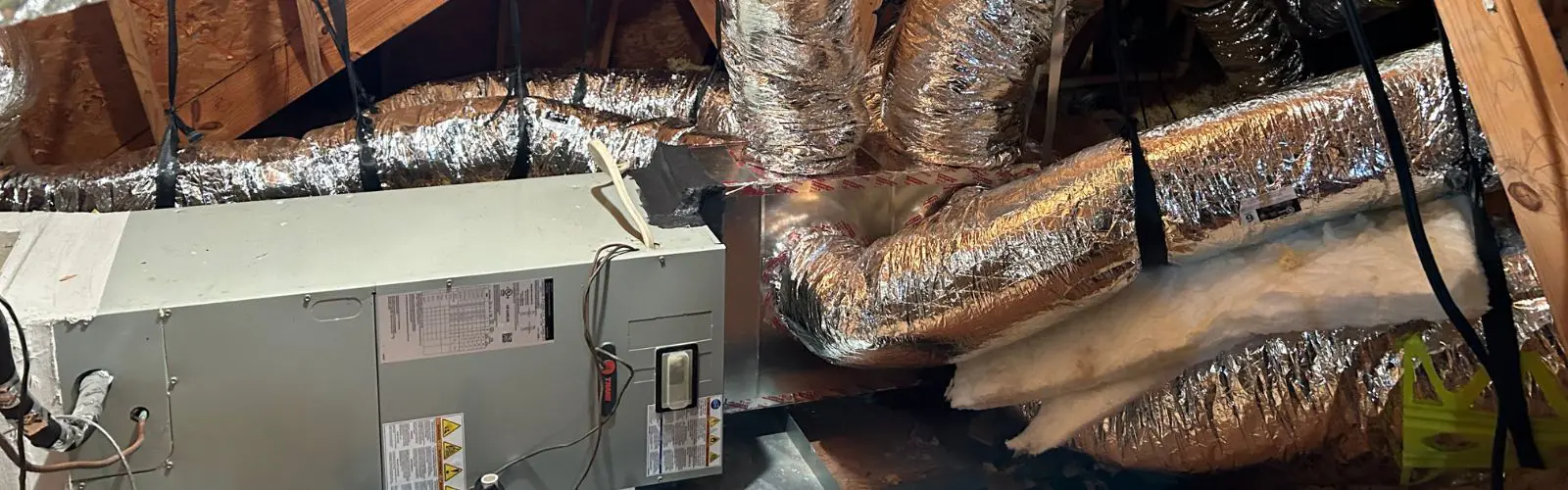
Heater & Furnace Repair in Houston
QUICK ANSWER
Castle Air Conditioning & Heating repairs heaters, furnaces and heat pumps across southwest Houston, Fort Bend County and the Bay Area. Call in the morning and we will usually reach you the same day. We work on all makes and models, our technicians are NATE-certified, and you get the repair price in writing before anything starts. If a carbon monoxide alarm is sounding, leave the house first and call 911 or your gas utility, then call us. Otherwise, call or text (713) 667-7606.
No heat, and it is cold?
Call or text (713) 667-7606. We answer 24 hours a day. A house with no heat, elderly residents or a newborn in it is not something to leave on a contact form overnight.
Houston heaters fail for a different reason than most of the country
Up north a furnace runs for months on end. Here it might run in earnest for three or four weeks a year, and sit untouched for the other eleven months.
That idleness is the problem. A system that sits still all year collects dust on the burners and the flame sensor, loses lubrication, and occasionally acquires a rodent nest or a wasp nest in the flue. Then the first genuine cold front comes through, every thermostat in Fort Bend County calls for heat on the same evening, and the faults all surface at once.
It is why the fall tune-up matters more here than the calendar suggests. The failure is rarely wear. It is nearly always something that went wrong quietly while nobody was looking.
What we are usually called out for
The system runs but blows cool air
On a gas furnace this is often the flame sensor: a thin metal rod that proves the burner has lit. It fouls with a film of oxide over a season, stops proving flame, and the furnace shuts the gas off as a safety measure. The blower keeps running, so you get air, just not warm air. It is one of the cheaper faults we see and one of the most common.
The furnace starts, then shuts down after a few minutes
Short cycling on a heat call is usually a safety device doing its job, which means something else is wrong. Restricted airflow from a blocked filter is the most common cause, and the fix is often a filter and a clean rather than a part.
No response at all from the thermostat
Batteries, a tripped breaker, a blown low-voltage fuse on the control board, or a condensate float switch that has cut the whole system off. Worth checking the simple ones before you call.
A heat pump that is blowing cold in winter
A heat pump in defrost mode will briefly blow cool air and steam outside. That is normal. A heat pump that never recovers is not. See heat pumps for how these systems behave differently.
Electric heat strips that are not coming on
Plenty of Houston homes have no furnace at all, just an air handler with electric resistance heat. When a strip or its sequencer fails you may not notice until the coldest night, because the system copes fine until it is genuinely cold outside.
Loud noises on start-up
A bang or boom when the burner lights is delayed ignition, and it is not something to live with. Grinding or screeching usually means the blower motor or its bearings. Both want looking at rather than waiting out.
Burning smells
A faint burning-dust smell on the first heat call of the season is normal and clears in an hour or two. A smell that persists, smells electrical, or smells like sulphur is not. Shut the system down and call.
The part we will not gloss over: carbon monoxide
Any appliance that burns gas produces carbon monoxide, and the flue is what takes it outside. A cracked heat exchanger, a blocked flue or a badly drafting furnace can put it inside instead. It has no smell and no colour.
If a CO alarm sounds
Get everyone out of the house first. Call 911 or your gas utility from outside. Do not go back in to investigate, and do not wait on an HVAC company to arrive before leaving. Once the property is safe, we will test the system and tell you plainly what we find.
On a heating service we test the heat exchanger, check the flue and confirm the system is drafting properly, and we check that you actually have working carbon monoxide detectors. If we find a cracked heat exchanger we will tell you, and we will not repair around it. That is a replacement conversation, not a patch.
What the symptom usually means
| What you are seeing | What it usually means | What to do first |
|---|---|---|
| Air is blowing, but it is not warm | On gas, most often a dirty flame sensor. On a heat pump or air handler, failed heat strips or a reversing valve. | Check the thermostat is set to HEAT and above room temperature, then call. |
| Runs a few minutes, then stops | A safety limit tripping, usually from restricted airflow. | Change the filter and open any closed vents. If it repeats, stop and call. |
| Nothing happens at all | Breaker, thermostat batteries, a control board fuse, or a float switch that has cut power. | Check batteries and the breaker. Do not reset a breaker repeatedly if it keeps tripping. |
| Bang or boom when it lights | Delayed ignition. Gas is pooling before it ignites. | Switch the system off and call. This one should not wait. |
| Grinding, screeching or rattling | Blower motor, bearings or a loose component. | Shut it down at the thermostat and call. |
| A persistent burning or electrical smell | Could be a motor, wiring or a flue problem. | Shut down at the breaker and call. Dust smell on the first run of the season is normal and passes. |
| Carbon monoxide alarm sounding | Treat as an emergency regardless of cause. | Leave the house. Call 911 or the gas utility from outside. |
| Some rooms warm, others cold | Ductwork, balancing or a zoning fault more often than the equipment. | Note which rooms and when. It helps us find it faster. |
How quickly we can get to you
If you call in the morning we will usually reach you the same day, including Seabrook and the Bay Area. The honest exception is the first hard cold snap of the year, when every house in the area wants a technician on the same morning. If the day is already full we will tell you on the phone rather than leave you waiting on someone who is not coming.
Outside normal hours we still answer, and we will come out for a genuine emergency. Out-of-hours work carries a premium and we tell you what it is before anyone is dispatched.
What a repair visit involves
| Step | What happens |
|---|---|
| 1. You call or text | A person answers, day or night. Describe what the system is doing. |
| 2. We triage | We say plainly whether this needs attention today or can safely wait until morning, and whether it is a safety issue. |
| 3. We diagnose | A NATE-certified technician tests ignition, gas pressure, airflow, temperature rise and the safety controls rather than swapping parts until the symptom goes away. There is a diagnostic fee, billed separately from the repair. |
| 4. You get a price | A written quote before any work starts. You decide. Nothing happens without your say-so. |
If you are on our Set It and Forget It maintenance plan, 10% comes off the work.
Repair, or replace?
Three things decide it: what has failed, how old the system is, and how long you are staying in the house. An ignitor or a flame sensor is a repair at almost any age. A cracked heat exchanger is not a repair at all. A failed blower motor on a system approaching twenty years is a genuine decision.
Because our heating season is so short, Houston furnaces often outlive the air conditioner they share a cabinet with. That matters: if the AC is on its last legs it is usually worth replacing both together rather than doing the work twice. Our guide to repair versus replacement works through it, and installation and replacement covers what a changeout involves.
Most of this is avoidable
A fall service is a different job from a spring one. We clean and test the burners and flame sensor, check the heat exchanger and flue, measure temperature rise, test every safety control, check the blower and the filter, and confirm your carbon monoxide detectors work. Most of what fails in January is visible in October.
Our Houston maintenance schedule sets out what to do and when. We have also written up the heater faults we see most often around Fort Bend County, nine ways to get more out of the heat you are paying for, and a winter guide to lower energy bills.
Why Houston homeowners call us
- Family owned and working in southwest Houston since 1975
- Licensed under TACLA #00051749C, and insured
- NATE-certified technicians
- All makes and models, including equipment we did not install and warranty work
- Gas furnaces, electric heat, heat pumps and ductless mini splits
- A written quote before any work begins
- 4.9 stars from 200 Google reviews
- We do not buy radio or television advertising, so that cost is not built into your bill
Areas we serve
Castle is based in Fulshear and repairs heating systems across southwest Houston, Fort Bend County and the Bay Area.
Frequently asked questions
Why is my heater blowing cold air?
On a gas furnace the most common cause is a dirty flame sensor. It stops proving that the burner has lit, so the furnace shuts the gas off while the blower keeps running. On a heat pump, briefly blowing cool air during a defrost cycle is normal. On an air handler with electric heat it usually means a failed heat strip or sequencer.
Do you offer same-day heater repair in Houston?
Usually, yes. If you call in the morning we will normally reach you the same day, including Seabrook and the Bay Area. The honest exception is the first hard freeze of the season, when demand spikes across the whole area. We will tell you on the phone rather than leave you waiting.
My carbon monoxide alarm went off. What should I do?
Get everyone out of the house and call 911 or your gas utility from outside. Do not go back in to look for the source and do not wait for an HVAC company before leaving. Once the property is safe we will test the system and tell you plainly what we find.
How often should a heater be serviced in Houston?
Once a year, in the fall, before the first cold front. Our season is short enough that people skip it, but the short season is exactly the problem. Most failures here come from a system sitting idle for eleven months, not from heavy use.
Is a cracked heat exchanger repairable?
No. If we find one we will tell you and we will not work around it, because that is what lets combustion gases into the air you breathe. It is a replacement conversation, and we will give you the options in writing.
Why does my furnace smell like burning when it first comes on?
Dust that has settled on the heat exchanger over the summer burning off. It is normal on the first heat call of the season and should clear within an hour or two. A smell that persists, or smells electrical or like sulphur, is not normal. Shut the system down and call.
Do you work on heat pumps as well as gas furnaces?
Yes. Gas furnaces, electric heat strips, heat pumps and ductless mini splits, on all makes and models including equipment we did not install.
Should I replace the furnace and the air conditioner at the same time?
Often, yes. They share a cabinet and ductwork, and because our heating season is short the furnace frequently outlasts the air conditioner. If the AC is near the end of its life, doing both together usually costs less than doing the work twice and gives you a properly matched system.
Your Houston HVAC Maintenance Schedule
What to check and when, including what the fall heating service actually covers.
Published by Castle Air Conditioning & Heating. Family owned since 1975. Licensed TACLA #00051749C. NATE-certified technicians serving Houston, Fort Bend County and the Bay Area. Quotes in writing before work begins. Last reviewed September 2026.
No heat? Call or text (713) 667-7606.