
Heat Pumps in Houston
QUICK ANSWER
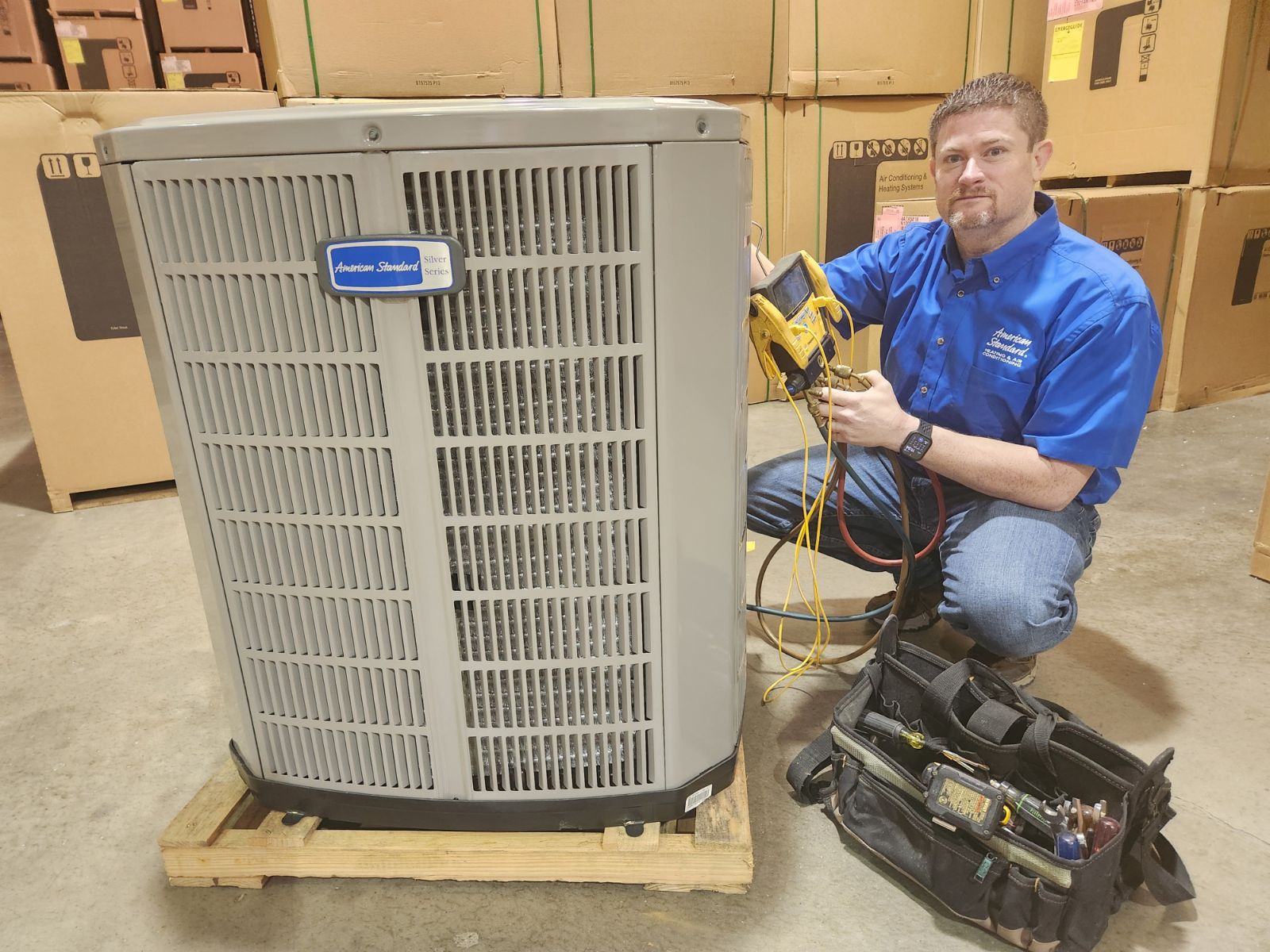
A heat pump is an air conditioner that also runs in reverse, so one system both cools and heats your house. Houston is close to ideal territory for them: our winters are mild enough that a heat pump handles almost the whole heating season on its own, which is not true further north. Castle Air Conditioning & Heating installs, repairs and services heat pumps across southwest Houston, Fort Bend County and the Bay Area. We are an American Standard Customer Care Dealer and we also install Mitsubishi. Call or text (713) 667-7606.
Heat pump blowing cold air in winter?
If the outdoor unit is steaming and the air goes cool for a few minutes, that is a defrost cycle and it is normal. If it never recovers, that is a fault. There is a section on this below, or call or text (713) 667-7606.
What a heat pump actually is
The name is unhelpful, so here is the plain version. An air conditioner does not create cold. It moves heat from inside your house to outside. A heat pump is the same machine with a valve that lets it run the other way, moving heat from outside into your house.
That is the whole idea. In summer it is an air conditioner. In winter it is an air conditioner running backwards. One outdoor unit, one indoor unit, no combustion, no flue, no gas.
Outside, it looks almost identical to a standard air conditioning condenser. Most people cannot tell by looking, and plenty of Houston homeowners already have one without realising it.
Why Houston is close to ideal heat pump country
The old objection to heat pumps was that they lose efficiency as it gets colder, and in a Minnesota January that is a real problem. It is a much smaller problem here.
Our heating season is short and mild. A heat pump handles almost all of it comfortably on its own, and the backup heat only has to carry the handful of genuinely cold nights we get. The equipment spends most of the year doing the job it is best at, and the rest of the year cooling, which it was always good at.
There is a second reason that matters more than people expect. Because a heat pump runs longer and gentler than a furnace, and because modern variable-speed units modulate rather than switching hard on and off, it pulls more moisture out of the air. In a climate where comfort is at least as much about humidity as temperature, that is the difference between a house that is cold and clammy and one that is genuinely comfortable.
The three ways to do it here
| Setup | How it works | Who it suits |
|---|---|---|
| All-electric ducted heat pump | Outdoor unit plus an indoor air handler with electric backup heat strips. Uses your existing ductwork. | Houses with no gas supply, which is a lot of newer Fort Bend County homes, and anyone replacing both AC and heating at once. |
| Dual fuel | A heat pump paired with a gas furnace. A smart thermostat runs whichever is cheaper at the current outdoor temperature and switches automatically. | Houses that already have gas. You get the efficiency of a heat pump most of the year and the furnace for the coldest nights. |
| Ductless | A mini split is a heat pump too, serving one room or a few. | Garages, additions, bonus rooms and houses with no ductwork. Not a whole-house answer on its own. |
Dual fuel is the one most people have never heard of, and in a city with cheap natural gas it is often the sensible middle ground. It is worth asking about before you decide.
What AUX and EM HEAT on your thermostat actually mean
This is the single most useful thing to understand about owning a heat pump, and almost nobody is told it.
AUX means auxiliary heat. When it is cold enough that the heat pump alone cannot keep up, the system brings in electric resistance heat strips to help. That is normal and automatic on a cold morning. It costs more to run than the heat pump alone, which is why your bill jumps in a cold snap.
EM HEAT means emergency heat, and it is not the same thing. It shuts the heat pump off entirely and runs on the strips alone. It exists for when the heat pump has actually failed. It is the most expensive way to heat your home, and it is meant to be a temporary measure while you wait for a repair.
Do not leave your thermostat on EM HEAT
Every winter we take calls about enormous electricity bills that turn out to be a thermostat someone switched to emergency heat weeks earlier and never switched back. If yours is on EM HEAT and the system has not failed, switch it back to HEAT.
The defrost cycle, and why it looks alarming
On a cold, damp morning a heat pump’s outdoor coil can ice up. The system deals with this by briefly reversing itself to warm the coil and melt the frost off.
While that happens you may see steam rising off the outdoor unit, hear the system change note, and feel the indoor air go cool for a few minutes. All of that is normal and it is the system working correctly. People call us thinking the unit is on fire. It is not.
What is not normal: the outdoor unit staying encased in solid ice, defrost cycles running constantly, or the indoor air never warming back up afterwards. Those are faults and worth a call.
What we will tell you honestly
| The consideration | The honest position |
|---|---|
| The air feels cooler than a furnace | A heat pump delivers a lower supply temperature for longer, rather than short blasts of very hot air. The room reaches the same temperature, but if you are used to a gas furnace it feels different at the vent. Most people stop noticing within a season. |
| Cold snaps cost more | When the strips come on, your electricity use climbs. That is expected behaviour, not a fault, and it is why we go through what your winter bill will realistically look like before you buy. |
| You already have cheap gas | Then a gas furnace may still be cheaper to run on the coldest days. Dual fuel exists precisely for this, and sometimes keeping the furnace you have is the right answer. |
| Your ductwork is the real problem | New equipment on leaking or undersized ducts will not deliver what it is rated for. We assess the ducts before quoting, and sometimes that is the whole job. |
| Sizing matters enormously | An oversized system short-cycles, never runs long enough to dehumidify, and wears its compressor out faster. Bigger is not better on the Gulf Coast. |
| It is one system, not two | A heat pump both heats and cools, so when it fails you lose both. That is an argument for maintenance, not against heat pumps, but it is worth knowing. |
Repair and service
We repair heat pumps on all makes and models, including equipment we did not install and systems still under warranty.
The faults we see most are the reversing valve that switches the system between heating and cooling, defrost control boards, low refrigerant charge, failed heat strips or sequencers, and outdoor fan motors. A heat pump also earns its maintenance more than a cooling-only system does, because it runs year round rather than half the year. Our maintenance plan covers both seasons, and plan customers get 10% off any work.
If your system is not heating at all, start with heater and furnace repair, and if it is not cooling, AC repair. It is the same technicians either way.
Tax credits and rebates
High-efficiency heat pumps have attracted federal tax credits and utility rebates in recent years, and they can make a meaningful difference to what a system actually costs you.
What they are worth, and which equipment qualifies, changes from year to year, and we are HVAC contractors rather than tax advisers. So we will tell you which of the systems we quote are in the efficiency bands that typically qualify, and point you at the current rules, but check the detail with your accountant before you count on a figure.
How we quote one
| Step | What happens |
|---|---|
| 1. We come and look | At the house, the ductwork, the attic access, the electrical supply and what you have now. Not a phone estimate. |
| 2. We work out what suits | All-electric, dual fuel or keeping what you have. Whether you have gas, and what your winter bills look like now, both matter. |
| 3. You get options in writing | Usually more than one, so you can see what the extra efficiency buys you rather than being handed a single number. |
| 4. We commission it properly | Charge, airflow and temperature split measured and documented, in both heating and cooling, so you know it works before the first cold night. |
Financing is available subject to approved credit.
Why Houston homeowners use us
- Family owned and working in southwest Houston since 1975
- Licensed under TACLA #00051749C, and insured
- NATE-certified technicians
- American Standard Customer Care Dealer, Mitsubishi installer, and we service all makes
- We size the system to the house rather than to the one that came out
- 4.9 stars from 200 Google reviews
- We do not buy radio or television advertising, so that cost is not built into your quote
Areas we serve
Castle is based in Fulshear and installs heat pumps across southwest Houston, Fort Bend County and the Bay Area.
Frequently asked questions
Do heat pumps work in Houston winters?
Very well. The old objection about heat pumps struggling in the cold applies to climates far harsher than ours. Our heating season is short and mild, so a heat pump handles almost all of it on its own and the backup heat only carries the few genuinely cold nights.
Why is my heat pump blowing cold air in winter?
If the outdoor unit is steaming and the indoor air goes cool for a few minutes, that is a defrost cycle and it is normal. If the air never warms back up, if the outdoor unit stays covered in solid ice, or if it defrosts constantly, that is a fault and worth a call.
What is the difference between AUX heat and emergency heat?
Auxiliary heat runs alongside the heat pump automatically when it is too cold for the heat pump alone. Emergency heat shuts the heat pump off completely and runs on electric strips only, and it exists for when the heat pump has failed. Emergency heat is far more expensive, so it should not be left on.
Why did my electricity bill jump during the cold snap?
Almost always the auxiliary heat strips doing their job. When it is cold enough, the system brings them in to keep up, and they use considerably more electricity than the heat pump alone. It is worth checking that nobody has left the thermostat on emergency heat, because that will do the same thing and keep doing it.
Is a heat pump better than a gas furnace in Houston?
It depends on whether you have gas and what you are replacing. If your house is all-electric, a heat pump is usually the clear answer. If you have gas and cheap rates, dual fuel gives you both and lets a smart thermostat pick whichever is cheaper at the time. We will tell you which one your house actually suits.
Can I use my existing ductwork for a heat pump?
Usually, but it has to be assessed. New equipment on leaking or undersized ducts will not deliver what it is rated for, and in some houses the ducts were the real problem all along.
How long does a heat pump last in Houston?
Less than the label suggests, because it runs year round rather than for one season. Fifteen years is a realistic point to start planning rather than a hard limit, and a maintained system will comfortably outlast a neglected one.
Are there tax credits for installing a heat pump?
Often, for equipment in the higher efficiency bands, and utility rebates sometimes apply as well. The amounts and the qualifying criteria change from year to year. We will tell you which of the systems we quote typically qualify, but confirm the detail with your accountant rather than relying on us for tax advice.
AC Installation & Replacement in Houston
What actually changes the price of a replacement, and how we decide between repairing and replacing.
Published by Castle Air Conditioning & Heating. Family owned since 1975. Licensed TACLA #00051749C. NATE-certified technicians serving Houston, Fort Bend County and the Bay Area. Quotes in writing before work begins. Last reviewed September 2026.
Thinking about a heat pump? Call or text (713) 667-7606.