A heat pump is an air conditioner that can also run backward. In summer it does exactly what your AC does. In winter it flips direction and brings heat into the house instead of pushing it out. Same box in the yard, same ducts, one extra part inside. In Houston that difference matters more than it would in most of the country, because our winters are mild enough that a heat pump suits the climate well.
On this page
- It’s the same machine
- How is the air cold when it is 100 out?
- The one part that makes the difference
- Do heat pumps work in Houston?
- Most of the year it’s just your AC
- Heat pump or gas furnace?
- Hybrid systems: a heat pump and a furnace together
- Are heat pumps efficient here?
- What size you need
- What AUX and EM HEAT mean
- The repairs we actually see
- Heat pump or mini split?
- How long one lasts here
- The honest pros and cons
- What moves the price
- Where we work
- What Houston homeowners say
- Frequently asked questions
It’s the same machine
An air conditioner does not make cold air. There is no such thing as cold, only the absence of heat, so no machine can manufacture it. What an air conditioner does is pick up heat from the air inside your house and dump it outside. What is left behind feels cool.
Your refrigerator works the same way. It is not making cold inside the box, it is pumping the heat out of the box and into your kitchen. That is why the back of a fridge is warm.
A heat pump does that too. It just has the option of doing it the other way around. In winter it picks up heat from the outdoor air and carries it inside.
There is heat in cold air. Not much, but enough to move, and moving heat takes less energy than making it from scratch. That is the whole idea behind a heat pump, and it is why they come up whenever people talk about running costs.
Worth being straight about that last part. Using less energy and costing less are not the same thing, because it depends what you pay for electricity against what you pay for gas. A heat pump is the more efficient machine. Whether it is cheaper to run than your furnace depends on your rates.
Summer
Heat goes out
House → Yard
The system picks up heat from the air in your rooms and releases it outside. That is air conditioning, and a heat pump and an AC do it identically.
Winter
Heat comes in
Yard → House
The same system runs the other way. It picks up heat from the outdoor air, even when that air is cold, and brings it indoors. An AC cannot do this. A heat pump can.
So how is the air cold when it is 100 outside?
Fair question, and it is the one that makes people doubt the whole idea. If the system is only moving heat around, how does it win on a day when the yard is hotter than the house?
The answer is the compressor, and the refrigerant it pushes around.
First, the refrigerant. Freon is a brand name. What is actually in your system is refrigerant, and its job is to carry heat from one place to another. It works because it changes between liquid and gas at useful temperatures. At the indoor coil it boils into a gas, and boiling soaks up a great deal of heat. At the outdoor coil it turns back into a liquid and lets that heat go. Then it goes around and does it again.
It is not used up along the way. If a system is low on refrigerant, it has a leak. Refrigerant is not fuel.
Now the part that answers your question. Heat only ever moves from something hotter to something colder. So the system makes sure it is on the right side of that at both ends:
- Indoors, the coil is run at around 40 degrees. Your room air is a lot warmer than that, so heat leaves the air and goes into the coil. The air coming out of the vents is what is left.
- Outdoors, the compressor squeezes the refrigerant until it is hotter than the air outside — often twenty or thirty degrees hotter. On a 100-degree afternoon that coil might be sitting at 125. Now the yard is the cooler of the two, so the heat flows out into it.
That is the whole trick. The compressor makes the refrigerant colder than your house at one end and hotter than the outdoors at the other, so heat moves the way you want it to in both places.
And that is why a heat pump can heat. Run the same process backward and the outdoor coil is driven colder than the cold air outside. A 45-degree morning is warm compared to a coil below freezing, so heat flows out of that air and into the coil, and gets carried indoors. It feels like getting something for nothing. It is really just the same pump, pointed the other way.
The one part that makes the difference
The part is called a reversing valve. It sits in the outdoor unit and it decides which direction the refrigerant travels. One way, the house gets cooler. The other way, the house gets warmer.
That is worth knowing for a practical reason. When a heat pump cools fine all summer and then will not heat in December, the reversing valve is one of the first things we check, along with the thermostat, the wiring and the refrigerant charge. The rest of the system is clearly working, because it just cooled your house for five months.
Do heat pumps work in Houston?
Yes. This is close to ideal heat pump country.
The worry people have is cold. A heat pump pulls heat out of the outdoor air, and the colder that air gets, the less there is to pull, so capacity and efficiency both fall as the temperature drops. That is where the old reputation came from.
It is out of date. Plenty of modern heat pumps keep working well below freezing, and cold-climate models are built for winters far harder than ours. Whether a system needs help from backup heat on a given night depends on the equipment, how it was sized, and how much heat the house is losing — not on one magic temperature.
What Houston has in its favor is that the question rarely gets tested. Here is our winter.
Houston’s average overnight low, the five cool months
Average daily minimum temperature, 1991 to 2020 climate normals from the National Weather Service. These are the coldest hours of the night in our coolest months.
Even in January, the average Houston night bottoms out around 44 degrees. Individual nights get colder than the average, which is what the backup heat is there for, but a Houston winter asks far less of a heat pump than a winter in Chicago or Denver does. That is the real argument for one here.
It does get genuinely cold occasionally. The record low for Houston is 5 degrees, set on January 18, 1930. A heat pump will need its backup heat on a night like that, and so will everything else.
Most of the year it’s just your air conditioner
Here is the part that gets lost in the heat pump conversation. In Houston, a heat pump spends most of its working life doing the job your AC already does.
Houston’s average temperature across the year
Average temperature for the whole day, 1991 to 2020 climate normals from the National Weather Service. This is a different measure from the chart above, which showed overnight lows. Red months lean on cooling, navy months on heating, using 65 degrees as the rough dividing line.
Roughly seven months leaning on cooling against five where the heat runs at all, and even those five are mild. That is a rule of thumb from the averages rather than a schedule your system follows, but it is the honest way to think about a heat pump here. You are buying an air conditioner that also covers winter, rather than a heater that also cools.
Heat pump or gas furnace?
This is the question behind most of the calls we get on the subject. The short answer is that it usually comes down to what the house already has.
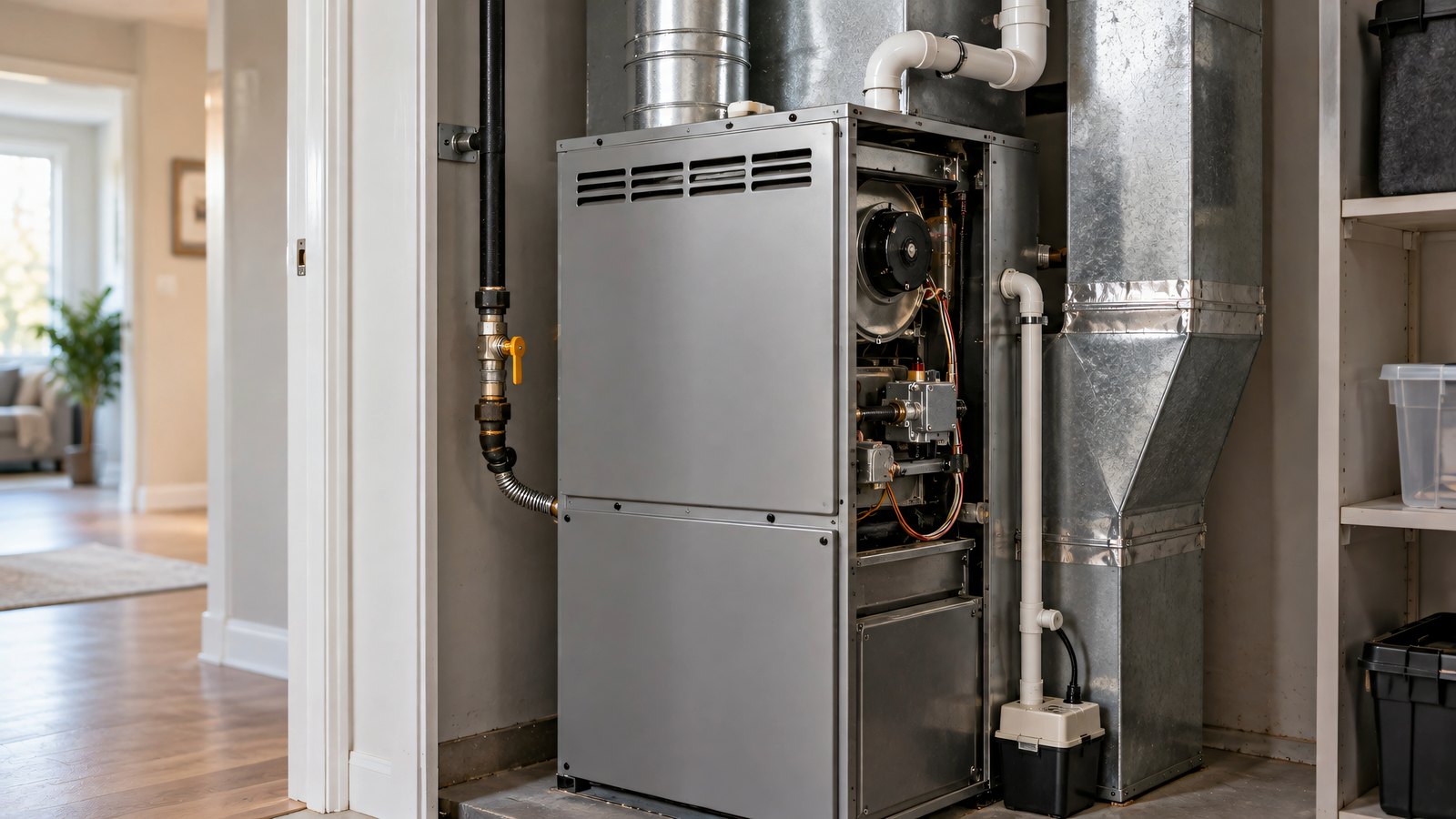
A gas furnace burns gas to make heat. It produces strong, hot air quickly. It needs a gas line and it needs venting, because burning anything produces exhaust. In a house that already has both, replacing a furnace with a furnace is the simple path.
A heat pump moves heat instead of making it. One system covers summer and winter, so there is one system to maintain instead of a separate furnace and air conditioner. A split heat pump still has an indoor unit and an outdoor unit. It runs on electricity, so there is no gas line, no combustion and no carbon monoxide produced by it. In an all-electric house it is usually the obvious choice.
The harder case is a house that has gas but is replacing everything at once. That’s worth discussing in detail rather than defaulting to whatever is already there. How long you plan to stay matters. So does the condition of the ductwork, and whether the electrical panel can carry the backup heat.
| Heat pump | Gas furnace | |
|---|---|---|
| How it makes heat | Moves heat in from outside | Burns gas to create heat |
| Cools in summer too | Yes, it is the same system | No, you need a separate AC |
| Needs a gas line | No | Yes |
| Produces carbon monoxide | No, nothing is burned | Yes, so it has to be vented |
| Air from the vents | Warmer than the room, often cooler than furnace air | Clearly hot to the touch |
| On a hard freeze | Leans on the backup element | Not affected by outdoor cold |
| Running hours a year here | Both seasons, so high | A few weeks, so low |
| Equipment to maintain | One system | Two, the furnace and the AC |
Hybrid systems: a heat pump and a furnace together
You don’t have to pick one. A hybrid system, also called a dual-fuel system, pairs an electric heat pump with a gas furnace in the same house and lets the two trade off.
The heat pump does the cooling all summer. It also does the heating through mild weather, which in Houston is most of the winter. When it gets cold enough that gas heat is the better tool, the furnace takes over. The point where that handoff happens is called the changeover temperature, and it gets set when the system is installed.
For a house that already has gas, this is worth asking about. You get a heat pump running the weeks you actually use heat, and a furnace waiting for the cold snaps. Our winters are mild enough that the heat pump carries most of the season on its own.
Are heat pumps efficient here?
Yes, and the reason is the one from the top of this page. A furnace has to create heat. A heat pump only has to move heat that already exists, and moving takes less energy than making.
Less energy is not automatically less money. That depends on the price of electricity against the price of gas where you are. What we can say is that the heat pump does more with each unit of energy it uses.
Two ratings get quoted on the sticker. SEER2 describes how efficiently the system cools. HSPF2 describes how efficiently it heats. Higher is better on both. The backup element has its own rating and it is not impressive, which is exactly why you want the heat pump doing the work rather than the backup.
One caution. Those ratings are measured under test conditions, not in your house. A high-rated system fed by leaking ducts in a hot attic will not deliver what the label promises. That is not a reason to ignore the rating. It is a reason to deal with the ducts at the same time.
What size you need
The size comes from the house, not from the label on the old unit.
That matters more than people expect, because the old unit may have been wrong from the day it went in. If somebody sizes your replacement by reading the badge on what is already there, they are copying a previous decision instead of making one.
What actually goes into it: the square footage, the ceiling heights, how much glass the house has and which way it faces, the insulation above the ceiling, and how leaky the ductwork is. A house that has been added onto is almost always carrying a system sized for the smaller version of itself.
Bigger is not safer. An oversized system cools the air fast, shuts off early and never runs long enough to pull the humidity out. In Houston that leaves you with a house that is cold and still feels damp. It also wears the equipment faster, because starting and stopping is harder on it than running.
What AUX and EM HEAT mean
Two labels show up on thermostats connected to a heat pump, and both worry people.
AUX HEAT means the backup heat has kicked in to help. On most systems that is an electric element, though a dual-fuel setup uses a gas furnace instead. On a cold morning that is the system doing what it is designed to do. If it is on constantly, or on when it is mild outside, that is worth a phone call.
EM HEAT means emergency heat. On most systems it shuts the heat pump off entirely and runs on the backup alone. That is for when the heat pump itself has failed. It is not a setting to leave on, because it is the expensive way to heat a house.
Our heat pumps page goes further into both, along with the defrost cycle and what it looks like from the yard.
The repairs we actually see
A heat pump is an air conditioner plus one extra trick, so most of what goes wrong is what goes wrong on any AC. Capacitors, contactors, fan motors, refrigerant leaks. The faults that are specific to a heat pump are these:
- It cools fine but will not heat. Often the reversing valve, because everything else just worked all summer.
- The backup heat runs constantly. Either the heat pump is not keeping up or the thermostat is wired or set wrong. Worth checking before a cold snap, not during one.
- It ices over and stays iced. The defrost cycle is supposed to clear that. If it does not, the defrost control or its sensor is the usual cause.
- It heats a little, then stops. Often a sensor telling the system something is wrong outside when it is not.
Worth saying plainly: cool air from the vents on a cold day is usually not a fault. That is how a heat pump is meant to feel. Call about it if you want it checked, but it is not the emergency it feels like.
Heat pump or mini split?
Most mini splits are heat pumps. A few are cooling only, so it is worth asking which one you are being quoted. The difference from a ducted system is how the air gets to the room.
A standard heat pump pushes air through the ducts you already have. A mini split skips the ducts and blows straight into the room from a unit on the wall, connected to the outdoor unit by a line through a small hole.
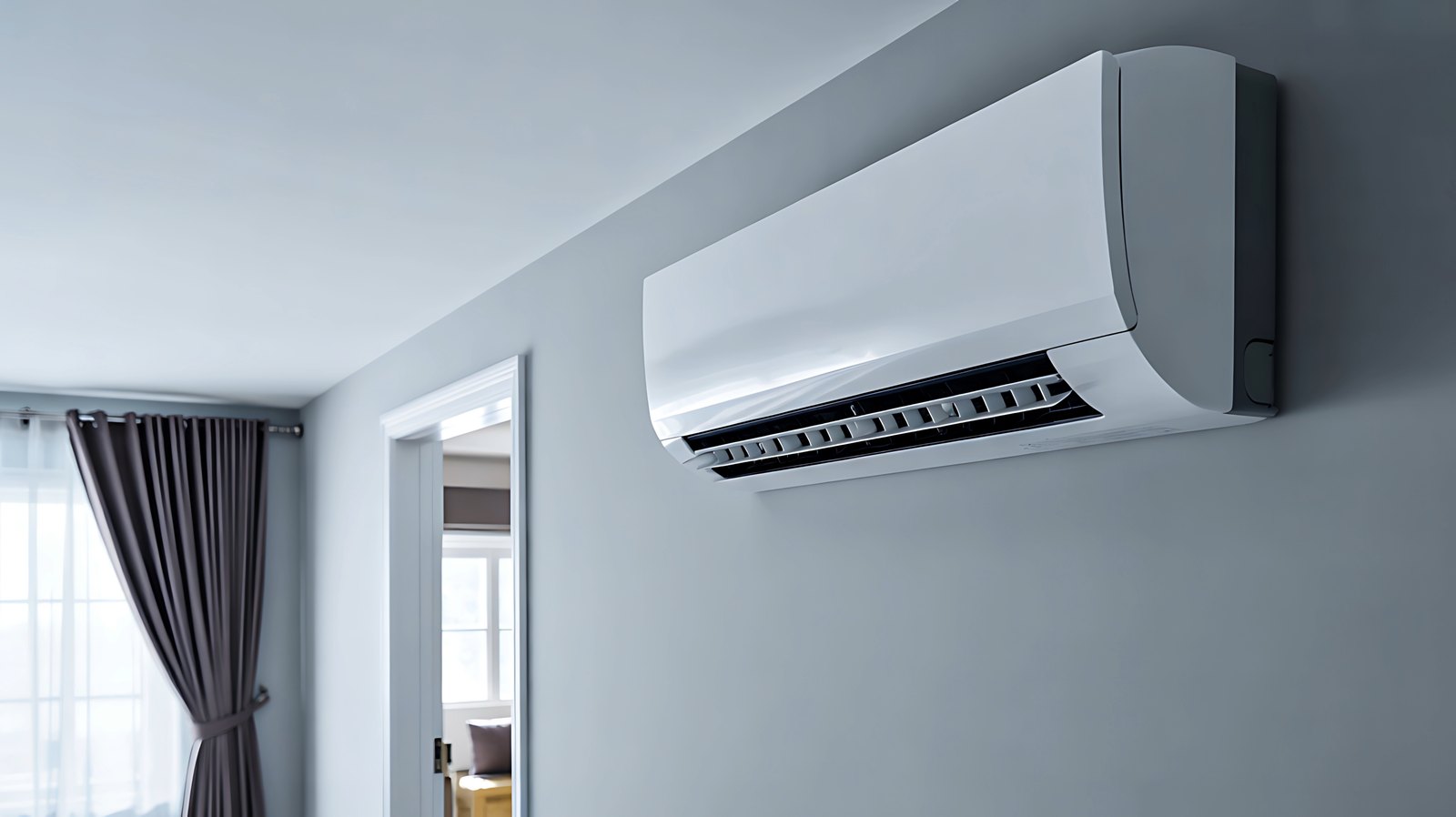
If the house has sound ductwork, a ducted heat pump is usually the straightforward answer. A mini split earns its place where there are no ducts worth using, or where one room has always been a problem — a converted garage, a room over the garage, a finished attic, or an addition the original system was never sized to cover. See mini splits for more.
How long one lasts here
Plan on a working life closer to an air conditioner’s than a furnace’s.
The reason is running hours. A gas furnace in Houston works a few weeks a year and sits idle the rest of the time. A heat pump is the cooling system too, so it runs through our long summer and then keeps going through winter, so it piles up more hours than a furnace does. It is replacing two appliances rather than one, though, so that is not a straight comparison.
That also means maintenance earns its keep more on a heat pump than on a furnace. Two visits a year, one before summer and one before winter, is the schedule we recommend. More on that on our maintenance page.
The honest pros and cons
What is good about a heat pump in Houston:
- One system handles both seasons, so there is one thing to service instead of two
- Moving heat takes less energy than burning fuel to make it
- No gas line, no combustion, and no carbon monoxide produced by the unit
- Houston’s mild winters sit comfortably inside the range where they work well
- They use the ductwork you already have
And the drawbacks:
- The air from the vents feels cooler than furnace air, and some people never get used to it
- On a hard freeze the backup element does the work, and that is the expensive way to heat
- More running hours a year than a furnace, so wear arrives sooner
- The backup heat needs electrical capacity, and not every older panel has it
What moves the price
We do not publish a figure for this, and anyone who quotes one before seeing the house is guessing. What actually moves it:
- The size the house needs, which comes from the house and not from the old unit’s label
- Whether the ductwork is sound or needs work before anything new goes in
- What the electrical panel can carry, since the backup heat draws real current
- Whether you are replacing a furnace and an AC together or just one of them
- Where the equipment sits and how hard it is to get to
A planned replacement in a mild month gives you room to compare options. An emergency one in August does not. See installation and replacement for what the work involves.
Where we work
Castle is based in Fulshear and covers southwest Houston, Fort Bend County, the Bay Area and the Gulf Coast. If you are considering a heat pump, these are the service area pages for the places we are in most often:
What Houston homeowners say
Real homeowners, real service
Houston homeowners keep asking for our technicians by name.
Google Reviews
4.9
★★★★★
Based on 202 reviews
Frequently asked questions
Is a heat pump the same thing as an air conditioner?
Almost. In summer they do the same job in the same way. A heat pump has one extra part that lets it run in reverse, so it can heat the house in winter as well. Standing in the yard looking at the outdoor unit, you would not be able to tell them apart.
Do heat pumps actually work in Houston winters?
Yes, and this is one of the better climates in the country for one. Capacity does fall as the outdoor air gets colder, but Houston’s coldest month averages an overnight low of about 44 degrees, so our winters ask far less of a heat pump than northern ones do. Modern units keep working well below freezing in any case.
Heat pump or gas furnace for a Houston house?
If the house already has a gas line and a working furnace, replacing like with like is usually simpler. If it is all-electric, or the furnace is at the end of its life anyway, a heat pump covers both seasons with one system. We will look at what is already there before telling you which way to go.
What is a hybrid or dual-fuel system?
It is a heat pump and a gas furnace in the same house, wired to work as one system. The heat pump cools all summer and heats through mild weather. The furnace takes over on the colder nights. For a Houston home that already has gas, it covers the long cooling season and the few nights that really do get cold.
Why does the air from my vents feel cool when the heat is on?
That is normal for a heat pump and it surprises people constantly. A gas furnace blows air at a temperature well above body heat, so it feels hot on your hand. A heat pump usually delivers air that is warmer than the room but cooler than furnace air, so it can feel like it is not working when it is working fine.
What does AUX HEAT on my thermostat mean?
It means the backup heat has switched on to help the heat pump, usually an electric element, though some systems use a gas furnace instead. On a genuinely cold morning that is expected. If it is on all the time, or on when it is mild out, something is wrong and it is worth a call. There is more detail on our heat pumps page.
Why is my outdoor unit steaming in the winter?
That is the defrost cycle, and it is supposed to happen. The unit briefly runs backward to melt frost off the outdoor coil, which produces steam and sometimes a loud noise. It lasts a few minutes. People call us about it every winter and it is almost always fine.
How long does a heat pump last in Texas?
Plan on a working life closer to an air conditioner’s than a furnace’s. A heat pump runs in both seasons, so it piles up far more running hours a year than a Houston furnace does. Maintenance matters more for the same reason.
Do I need a gas line for a heat pump?
No. A heat pump runs on electricity and does not burn anything. That also means no combustion venting and no carbon monoxide coming from it, which is one reason they suit all-electric houses.
Does an air conditioner actually make cold air?
No. There is no such thing as cold, only the absence of heat, so nothing can manufacture it. An air conditioner takes heat out of the air in your house and moves it outside. The air left behind is what you feel coming from the vents.
Your refrigerator does the same thing. It is not making cold inside the box, it is pumping heat out of the box into the room, which is why the back of a fridge is warm.
What does the Freon in my air conditioner do?
Freon is a brand name. What is in the system is refrigerant, and it is the carrier that moves heat from one place to another. It boils into a gas at the indoor coil, which soaks up heat, then turns back into a liquid at the outdoor coil and releases that heat outside.
It is not consumed. Refrigerant is not fuel, so a system that is low on it has a leak, and topping it off without finding the leak only buys time.
How can the air be cold when it is 100 degrees outside?
Because of the compressor. Heat only moves from something hotter to something colder, so the system makes sure it is on the right side of that at both ends. Indoors the coil runs at around 40 degrees, far colder than your room, so heat leaves the air. Outdoors the compressor squeezes the refrigerant until it is hotter than the outside air, often by twenty or thirty degrees, so on a 100-degree day that coil might sit at 125 and the heat flows out into the yard.
Does a heat pump cool the house in summer as well?
Yes. That is its main job here. In Houston a heat pump spends about seven months of the year cooling and a handful of mild months heating. You are not adding a heater to the house, you are replacing the air conditioner with one that also covers winter.
What size heat pump does my house need?
That comes from the house, not from the label on the old unit. Square footage, ceiling heights, how much glass there is and which way it faces, the insulation above the ceiling, and how leaky the ducts are. If a house has been added onto, the existing system is often sized for the smaller version of it.
Bigger is not safer. An oversized system shuts off before it has pulled the humidity out, which leaves the house cold and clammy.
Is a mini split a heat pump?
Usually. Most mini splits are heat pumps that skip the ductwork and blow straight into the room. If your ducts are sound, a ducted heat pump is usually simpler. A mini split earns its place in a converted garage, a finished attic or an addition the original system never reached.
What do SEER2 and HSPF2 mean?
SEER2 is how efficiently the system cools. HSPF2 is how efficiently it heats. Higher is better on both. Both are measured under test conditions, so a high-rated system fed by leaking ducts will not deliver what the label says.
Why does my backup heat keep switching on?
On a genuinely cold morning, that is normal. If it runs constantly, or runs when it is mild outside, something is wrong — the heat pump may not be keeping up, or the thermostat may be wired or configured incorrectly. It is worth dealing with before a cold snap rather than during one.
Can a heat pump use the ducts I already have?
Usually, yes. It is the same ductwork and the same vents. We still check the duct runs and the return air before quoting, because ducts that were undersized for the old system will be undersized for the new one.
Why your heater smells like burning the first time you turn it on — the other thing that worries people on the first cold night, and the four smells that mean shutting the system down.
Thinking about a heat pump, or trying to figure out why yours is not heating? Call or text and we’ll give you a straight answer.