AC Repair in Houston Heights, TX
Castle Air Conditioning & Heating covers Houston Heights for air conditioning repair, heating and furnace repair, heat pumps, mini splits, installation and maintenance. We’re family-owned, licensed and insured, and we’ve been doing this since 1975. Call in the morning and we’ll usually reach you the same day. Someone answers the phone around the clock.
On this page
- Why old Heights houses are hard on a system
- AC repair in the Heights
- Signs your system needs repair
- Emergency and same-day service
- Heating and furnace repair
- Mini splits for houses with no ductwork
- Installation and replacement
- Commercial work in the Heights
- Maintenance and tune-ups
- The systems we work on
- What Heights homeowners say
- Frequently asked questions
Fast, reliable air conditioning repair for Houston Heights homes
If you call in the morning we’ll usually reach you in Houston Heights the same day. Where the schedule means we can’t, we’ll say so on the phone rather than leave you waiting.
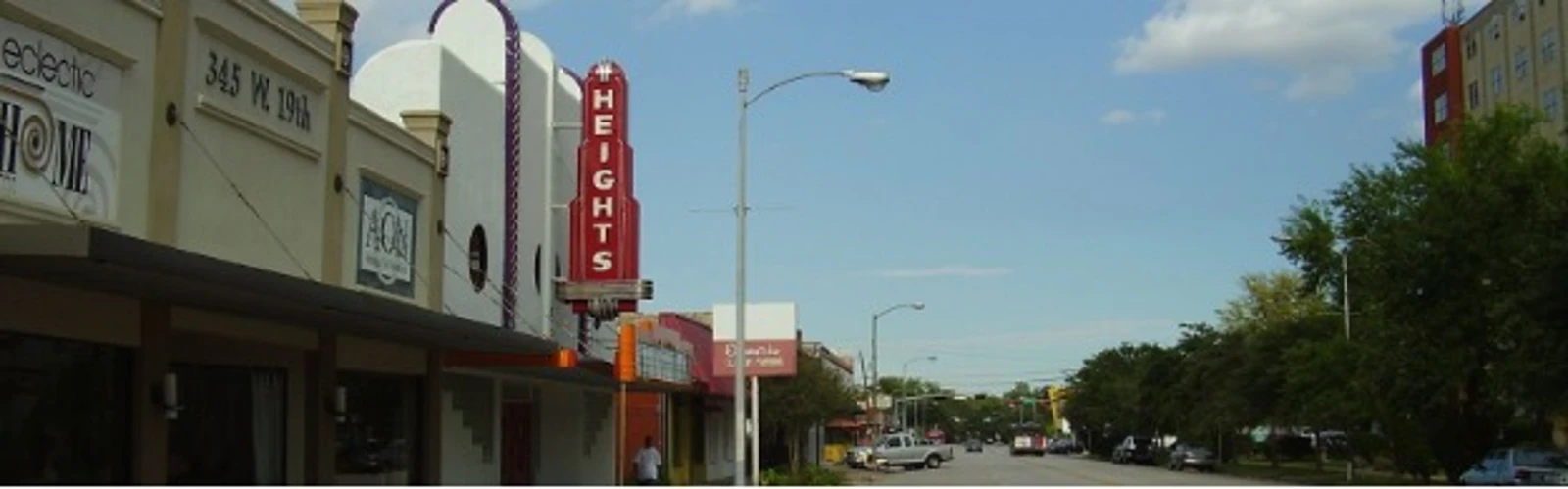
The Heights runs from the shaded esplanade along Heights Boulevard across to Marmion Park and the streets around it. When the air conditioning quits in a Houston summer, the house gets uncomfortable fast.
Castle Air Conditioning & Heating provides professional AC repair in Houston Heights, Texas, helping homeowners get comfortable again and keep their systems running efficiently. Our licensed technicians diagnose the fault accurately and repair all makes and models of air conditioners and heat pumps.
Why old Heights houses are hard on a system
Most of the Heights was built before air conditioning existed.
The bungalows along Heights Boulevard and the streets around it mostly went up between 1900 and 1930. Nobody designed them with ducts in mind. The air conditioning arrived decades later, and in a lot of these houses the ductwork got pushed into whatever space was free — a shallow attic, or the crawlspace under a pier-and-beam floor.
That’s where most of the trouble starts. Ducts under the floor sit in damp air and they leak at the joints. Ducts in a low attic get crushed or kinked where somebody had to work around a rafter. Either way, cooled air escapes before it reaches the room, and the system runs longer to make up the difference.
The other thing we see constantly is the addition. A house that started at 1,100 square feet gains a back room, a second floor or a finished garage. The air conditioner stayed the same size. It was never going to cool the extra space, and no amount of servicing changes that.
A bigger air conditioner is not the fix. An oversized system cools the air quickly, shuts off early, and never runs long enough to pull the humidity out. You end up with a house that is cold and still feels damp. The size has to match the house, which is why we measure instead of guessing.
Professional AC repair for Heights homes
Homes in the Heights run from historic bungalows to new builds, and they all depend on air conditioning to get through a Houston summer. Heat and humidity keep the system under load for months, and compressors, coils and motors wear out faster here than they would in a drier climate.
Most central air conditioning systems last about 12 to 15 years with good installation and regular maintenance, according to the Air-Conditioning, Heating and Refrigeration Institute. Even a well-maintained system needs repairs eventually.
You’ll get a straight diagnosis and a clear explanation of what failed, so you can decide what to do next. There’s more detail on our AC service and repair page.
Common signs your AC needs repair
Most AC problems start small and get worse quickly in this heat. Calling early is usually cheaper than waiting. Watch for:
- Warm air coming from the vents
- Weak airflow, even when the system is running
- Grinding, banging or squealing from the unit
- Ice on the refrigerant line or the indoor coil
- Indoor humidity that feels higher than usual
- Short cycling, where the system starts and stops every few minutes
Any one of these is worth a phone call before it turns into a breakdown in August.
Emergency and same-day AC and heating repair
We answer the phone 24 hours a day, seven days a week. A person picks up at two in the morning, not a machine.
Call in the morning and we’ll reach you the same day in almost every case. If we can’t, you’ll hear that on the call, rather than waiting all day for somebody who was never coming.
Outside normal hours we’ll still come out for a real emergency. If you’re not sure whether yours counts, call and describe it. We’ll tell you honestly whether it can wait until morning. What counts as an HVAC emergency explains where that line is.
Heating and furnace repair in the Heights
Heights houses only need real heat for a few weeks a year. That’s exactly why furnaces fail here. The system sits untouched from February to December, then gets asked to run on the first cold night, and that’s when you find out something is wrong.
The calls we get in the first cold snap are nearly always one of these:
- A burning smell on the first run, which is usually dust and usually harmless
- The furnace lights, runs for a minute, then shuts off
- The blower runs but the air coming out is cold
- An igniter or pilot that won’t stay lit
- A carbon monoxide alarm going off
Treat a carbon monoxide alarm as an emergency no matter what you think caused it. Get everyone outside and call from there. Same with a smell of gas.
Older Heights houses often have the furnace in a hall closet or up in the attic, which means the venting is worth checking too, not just the furnace. If the burning smell is what brought you here, this guide separates the harmless version from the ones that mean shutting the system down. Otherwise see heater service and repair.
Mini splits for houses with no ductwork
Some Heights houses have nowhere sensible to put a duct. The attic is too shallow, the walls are solid, or the room was added on and there was never a duct run to it.
A mini split solves that. It’s an indoor unit mounted on the wall, connected to a small outdoor unit by a refrigerant line that needs about a three-inch hole through the wall. No ducts. No tearing open a ceiling to chase a duct run that may not fit anyway.
They work well for a converted garage, a back addition, a finished attic room, or a home office that the original system never cooled properly. You can also run one room at a time instead of cooling the whole house to fix one hot bedroom.
Parts of the Heights are historic districts, and there are rules about changes you can see from the street. That affects where the outdoor unit goes. It’s worth checking before the work is planned. More on our mini splits page.
AC and heating installation and replacement
Replacing a system in an old Heights house is rarely just swapping the equipment. If the ductwork was added decades after the house was built, new equipment fed by leaking or undersized ducts will disappoint you no matter what it costs. We look at the duct runs, the return air and the attic insulation before quoting.
0–8 yrs
Still young
A fault is almost always a single part, and may still be covered by the manufacturer warranty.
8–15 yrs
The wear years
Capacitors, contactors and fan motors. Repair is nearly always the right answer here.
15–25 yrs
Decision territory
A failed compressor or a leaking coil is the point where replacement starts to win on value.
25+ yrs
Borrowed time
Parts get harder to find and efficiency is a long way behind anything current.
Our rule of thumb for repair or replace, not a measurement. The actual answer depends on the specific fault and the condition of the coil, which is why we look before we advise.
We install and replace air conditioners, furnaces, heat pumps and mini splits. If you’ve added square footage since the current system went in, the replacement should be sized for the house you have now, not the one it was built for.
Replacing in a mild month is a different experience from replacing in August. You get time to compare options instead of taking whatever is available that week. See installation and replacement for what the work involves.
Commercial HVAC in the Heights
The Heights isn’t only houses. There are shops, restaurants, offices and small mixed-use buildings through the middle of it, and we work on those too.
That means rooftop units, split systems, and the kind of equipment that sits above a storefront with no easy way to reach it. A restaurant has different problems from an office — kitchen heat, make-up air, and a system you can’t shut down in the middle of a dinner rush.
We handle repair, maintenance and replacement on commercial equipment. See commercial HVAC services, or commercial installation and replacement if you’re planning ahead.
Prevent breakdowns with routine maintenance
Two visits a year, one in spring and one in fall, is what keeps a system reliable. The technician checks the electrical parts, the refrigerant charge and the drain, and cleans what has gotten dirty.
The point is to catch the small things while they are still small. Many homeowners use our Set It and Forget It Assurance Plan, which books the visits so you don’t have to remember. Details on the preventative maintenance page.
The systems we work on
Our technicians handle:
- Central air conditioning systems
- Gas furnaces and electric heat strips
- Heat pumps
- Variable speed systems
- Zoned systems
- Mini splits
- Indoor air quality equipment, including whole-home air purifiers and UV lights
We work with American Standard, Carrier, Mitsubishi and other manufacturers, on old systems and new high-efficiency equipment alike.
What Heights homeowners say
Real homeowners, real service
Heights homeowners keep asking for our technicians by name.
Google Reviews
4.9
★★★★★
Based on 204 reviews
Frequently asked questions about AC and heating in Houston Heights
How much does AC repair usually cost in Houston Heights?
It depends on what failed. Small repairs like a capacitor or a thermostat are at the cheaper end. A compressor or a refrigerant leak costs more, and may be covered by your warranty. We don’t quote a figure before we’ve seen the system, because anyone who does is guessing.
Why is my AC running constantly but not cooling enough?
That usually points to airflow problems, low refrigerant, or a system that has gotten too old to keep up. Houston’s heat and humidity make it obvious faster than it would be somewhere drier. A licensed technician can tell you which one it is.
Is it safe to run my AC if it’s making a loud noise?
Grinding, banging or squealing means something mechanical is wrong. Running it like that can turn a small repair into a large one. Shut it off and book a visit.
How long does an AC repair appointment take?
Most repairs take one to two hours once we know what’s wrong. A harder job takes longer, and longer again if a part has to be ordered. Your technician will tell you the timing before starting. If you want maintenance done in the same visit, say so when you book and we’ll allow for it.
Can I fix my AC myself?
You can change the filter and check the thermostat settings. Those are safe. Almost everything else involves electrical parts or refrigerant, and both are worth leaving to someone licensed.
Do you repair furnaces and heaters in the Heights?
Yes. We repair and replace gas furnaces, electric heat strips and heat pumps, on all makes and models. Heights houses only need heat for a few weeks a year, so a furnace can sit untouched from February to December. That’s why so many of them fail on the first cold night.
If you smell gas, go outside first and call from there. Do the same for a carbon monoxide alarm, whatever you think set it off.
My house has no ductwork. What are my options?
A mini split. It’s an indoor unit on the wall connected to a small outdoor unit by a line that only needs a three-inch hole through the wall. No ducts, no tearing into the ceiling.
They suit Heights houses well, especially a converted garage, a back addition or an upstairs room that the original system never reached. More on our mini splits page.
Can you work on a house in a historic district?
Yes. Parts of the Heights are historic districts, and there are rules about changes that are visible from the street. That can affect where an outdoor unit sits. It’s worth checking before the work is planned rather than after, and we’ll talk through the options with you.
The upstairs room is always hotter than the rest of the house. Why?
Heat collects upstairs, and the attic above it gets far hotter than the outside air on a sunny day. If the room was added later, the system was probably never sized to cool it. If the ducts feeding it are long or crushed, not much air arrives.
We go through the usual causes in why upstairs is hotter than downstairs.
Do you handle commercial buildings in the Heights?
Yes. We service and replace rooftop units, split systems and the smaller equipment that runs a shop, a restaurant or an office. See commercial HVAC services for what that covers.
Schedule AC or heating repair in Houston Heights today
If your system isn’t keeping the house comfortable, we’re ready to help. We cover the Heights, Woodland Heights, Norhill and the streets around them, for repairs, maintenance, installation and replacement.
Call (713) 667-7606 or book online.
Areas we serve
Castle is based in Fulshear and covers southwest Houston, Fort Bend County, the Bay Area and the Gulf Coast.
Why is upstairs hotter than downstairs? — the most common complaint in two-story Heights houses, and what actually causes it. This page stays the overview of HVAC in the Heights as a whole.
Heating or cooling trouble in the Heights? Call or text and we’ll tell you honestly when we can be there.