
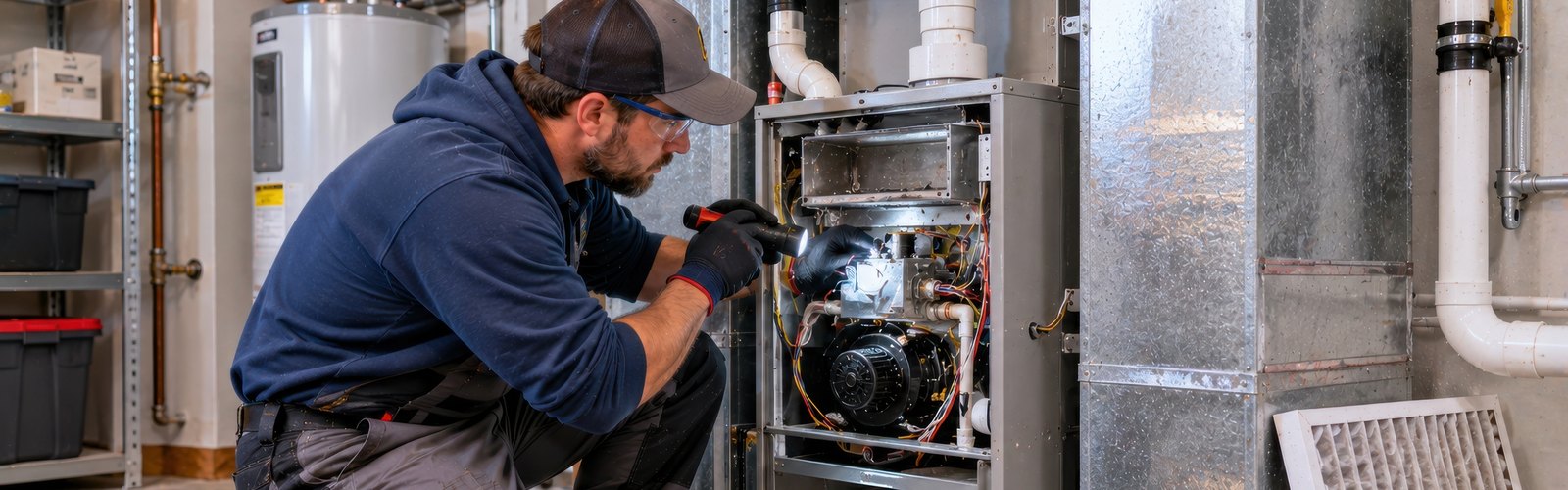
Heater Not Working? A Houston Homeowner’s Troubleshooting Guide
QUICK ANSWER
A heater not working in a Houston home is usually one of four simple things. Check these before you call: the thermostat is set to HEAT and above room temperature, the breaker labeled furnace or air handler hasn’t tripped, the filter isn’t clogged, and the furnace door panel is seated properly — most units won’t run with that panel loose. If you smell gas, hear a hissing line or a carbon monoxide alarm sounds, leave the house first and call 911 from outside. For everything else, Castle Air Conditioning & Heating answers 24/7 on (713) 667-7606 and offers same-day service.
On this page
Stop and call 911 for these three things
Almost everything on this page can wait for a technician. These three can’t, and they’re not really heating calls at all.
Leave the house first
A smell of rotten eggs or sulfur near the furnace, a carbon monoxide alarm sounding, or smoke and a burning smell that doesn’t clear within a few minutes. Get everyone outside, leave the door open behind you, and call 911 from outside. Don’t flip switches on your way out. Call us afterward and we’ll take it from there.
By contrast, a faint dusty burning smell the very first time you run the heat each winter is normal. That’s dust burning off a heat exchanger that has sat unused since February. It should clear within fifteen or twenty minutes. If it doesn’t, treat it as the list above.
Heater not working? Four things to check before you call
A good share of the no-heat calls we take in Houston turn out to be one of these four, and all four take a couple of minutes to rule out.
| Check | What to look for | Why it stops the heat |
|---|---|---|
| Thermostat | Set to HEAT, not COOL or AUTO. Target temperature at least three degrees above the room. | A thermostat in COOL will run the fan and blow room-temperature air, which feels cold. |
| Breaker | The breaker labeled furnace, air handler or heater. Switch it fully off, then back on. | Electric heat strips draw hard on startup and can trip a breaker that’s already weak. |
| Filter | Hold it up to a light. If you can’t see light through it, replace it. | A blocked filter starves the system of air and trips the high-limit safety switch. |
| Furnace panel | The removable door on the front of the furnace or air handler. Push until it seats. | A safety switch behind that panel cuts power when it’s loose. Common after a filter change. |
However, if all four are fine and the heat still won’t run, stop there. The next steps involve gas, high voltage or a sealed combustion chamber, and that’s where a licensed technician earns the call. Castle has been doing this in southwest Houston since 1975.

Heater not working: the usual causes
Once the simple things are ruled out, a heater not working in a Houston home usually comes down to one of these. Which one depends mostly on whether you have a gas furnace or an electric heat pump with strips.
| Cause | What you’d notice | Gas or electric |
|---|---|---|
| Failed igniter | The unit tries, clicks, then shuts down and retries a few times before giving up. | Gas |
| Flame sensor fouled | Burners light for a few seconds, then go out. Repeats on a loop. | Gas |
| Tripped high-limit switch | Fan runs, no heat. Usually follows a long spell with a dirty filter. | Both |
| Burned-out heat strips | Mildly warm air at best, and the room never reaches the set temperature. | Electric |
| Reversing valve stuck | Heat pump blows cold in heat mode. Often fine in cooling. | Heat pump |
| Capacitor or blower motor | A hum with no air movement, or no response at all. | Both |
| Thermostat wiring | Intermittent. Works, then doesn’t, with no pattern. | Both |
In short, none of these are unusual, and none of them mean the system is finished. A heater that has been reliable for years and suddenly stops is far more often a component than a condemned unit. If it genuinely is at the end of its life, we’ll tell you that plainly rather than selling you a repair that won’t hold — and replacement is a separate conversation to have calmly, not at nine at night.
Furnace blowing cold air
This is the single most common way the problem gets described to us, and it’s worth separating out, because “my furnace is blowing cold air” can mean three quite different things.
It blows cold for a minute, then warms up. That’s normal. The blower often starts slightly before the heat exchanger is up to temperature. Give it ninety seconds.
It blows room-temperature air continuously. Check the thermostat fan setting. On ON rather than AUTO, the fan runs constantly, including between heating cycles, and that air will feel cool against your skin. Switch it to AUTO. If the thermostat screen is blank or it won’t respond at all, see thermostat not working.
It blows genuinely cold air and never warms. Now it’s a fault — most often an igniter, a flame sensor, or on a heat pump a reversing valve stuck in cooling. That one needs a technician.
If you have a heat pump, air that feels cool is often normal rather than a fault. Our guide explains why: Heat Pump vs. AC in Texas.
How urgent is it really
Houston isn’t Minnesota, so a night without heat here’s usually uncomfortable rather than dangerous. Usually. Here’s how we triage it on the phone.
911
Gas, CO, smoke
Leave first, call from outside
Tonight
No heat under a freeze warning, or an infant, an older adult or someone with a heart or lung condition in the house
Call us, we answer 24/7
Tomorrow
No heat, mild night, healthy household
Same-day appointment
This week
One cold room, or heat that’s weak but working
Book at your convenience
After-hours rates differ from daytime rates. We confirm that with you before anyone is dispatched, so there’s no surprise on the invoice.
Why Houston heaters fail in the first cold week
Every year we take the same calls. A heater not working in the first cold week of the season is the single most common reason Houston homeowners call us between November and February. The first real cold front arrives, thousands of systems get switched to heat for the first time in eight months, and a share of them don’t start. It’s not a coincidence and it’s not bad luck.
A Houston heater sits idle far longer than one in a cold climate. Here’s how short the heating season actually is, using the normal overnight low at Bush Intercontinental.
Houston’s normal overnight low, month by month
Average daily minimum temperature, 1991 to 2020 climate normals from the National Weather Service Houston office. The three months marked in red are the only ones that average below 50 degrees overnight.
Three months. That’s the working life of a Houston heater in an average year, and the reason a system that cooled a house perfectly well all summer can refuse to produce heat in December. The record low here is 5 degrees, set on January 18, 1930, which is the other reason it’s worth knowing the system works before you need it.
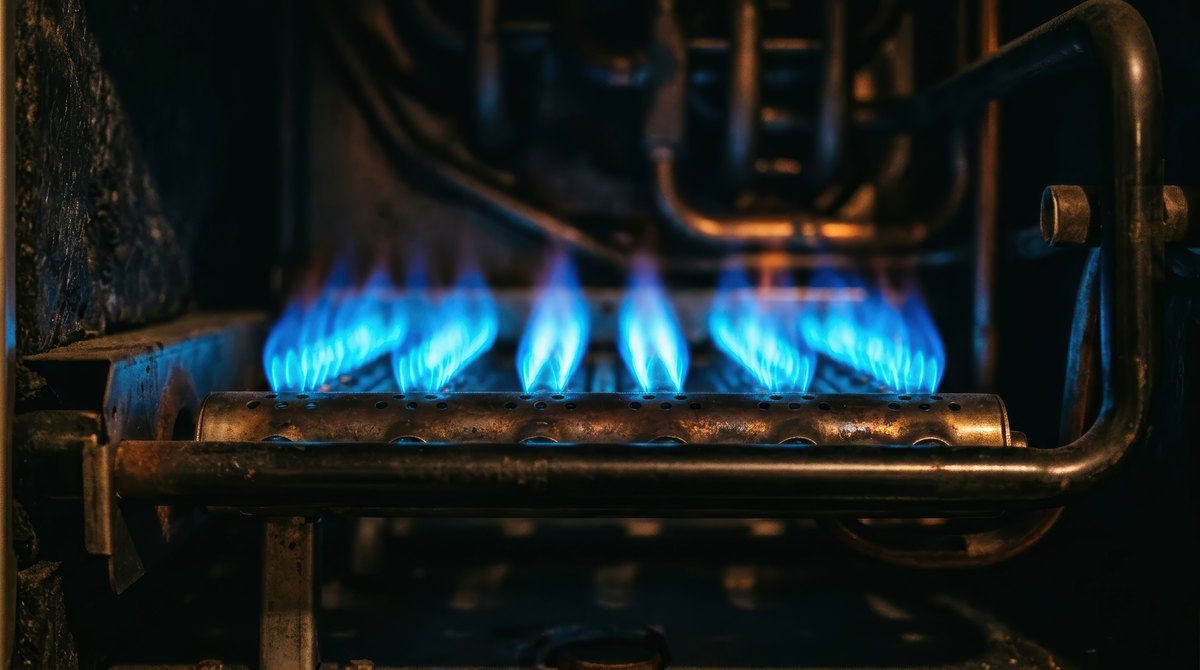
This is therefore exactly what a fall maintenance visit is for. Running the heat for twenty minutes in October, with somebody watching the burners, finds the failed igniter while it’s an appointment rather than an emergency. Plan holders also get ten percent off repair work through the year.
Heater repair across southwest Houston
We run heating calls across Houston and Fort Bend from our base in Fulshear. With a heater not working and a cold night coming, if you’re in one of these areas, we can usually be out the same day.
For the full picture of what we do when the heat goes out, see heater service and repair. If the problem turns out to be cooling rather than heating, our emergency and same-day AC repair page covers that side.
Frequently asked questions
Why is my heater not working all of a sudden?
Most often a thermostat setting, a tripped breaker, a clogged filter or a furnace door panel that’s not fully seated. Those four account for a large share of the no-heat calls we take. If all four check out, the usual culprits are a failed igniter or a fouled flame sensor on a gas furnace, or burned-out heat strips on an electric system.
Why is my furnace blowing cold air?
Cold for about a minute and then warming up is normal, because the blower starts slightly ahead of the heat exchanger. However, room-temperature air blowing constantly usually means the thermostat fan is set to ON rather than AUTO. Genuinely cold air that never warms is a fault, and it’s most often an igniter, a flame sensor, or a reversing valve stuck in cooling on a heat pump.
Is a heater not working an emergency in Houston?
Usually not on its own. It becomes one under a freeze warning, or if there’s an infant, an older adult, or someone with a heart or lung condition in the house. It’s always an emergency if you smell gas, a carbon monoxide alarm sounds, or there’s smoke — in those cases leave the house and call 911 before you call us.
Why does my heater smell like burning when I first turn it on?
Dust burning off a heat exchanger that has sat unused since winter. It’s normal in Houston, where heaters are idle for eight or nine months, and it should clear within fifteen to twenty minutes. If the smell is sharp, electrical or like plastic, or if it doesn’t clear, switch the system off and call.
What you can safely do yourself
Can I fix a heater not working myself?
You can check the thermostat, the breaker, the filter and the furnace door panel, and those four solve a meaningful number of cases. Beyond that you’re into gas, high voltage and a sealed combustion chamber, and Texas requires a licensed technician for that work. Castle holds TACLA license 00051749C.
Why is my heat pump blowing cold air in heat mode?
Most often a reversing valve stuck in the cooling position, which is why the same system will usually still cool perfectly well. It can also be a defrost cycle, which is normal and lasts a few minutes, or a refrigerant charge problem. If the cold air continues past ten minutes, it has to be checked.
Getting someone out
How quickly can you get out if my heater isn’t working?
Same day in most cases if you call in the morning, unless the day is already full. We answer the phone 24 hours a day on (713) 667-7606. After-hours rates differ from daytime rates and we confirm that with you before dispatching anyone.
Should I replace my heater or repair it?
A system that has worked reliably and stopped suddenly is far more often a failed component than a dead unit, and a repair is usually the right answer. Age, repeated failures and a cracked heat exchanger change that. We’ll tell you plainly which situation you’re in rather than selling a repair that won’t hold.
Real homeowners, real service
Houston homeowners keep asking for our technicians by name.
Google Reviews
4.9
★★★★★
Based on 205 reviews
HVAC Preventative Maintenance — the fall visit that finds a failed igniter in October, rather than you discovering a heater not working in December.
Heater not working? We answer 24/7.
Castle Air Conditioning & Heating — serving southwest Houston since 1975. TACLA 00051749C.