Heat pump not heating? First, make sure the thermostat is set to HEAT, above the room temperature, with the fan on AUTO. Then check the filter and the breakers. If the heat pump is blowing cold air for a few minutes and the outdoor unit is steaming, it’s probably in a defrost cycle, which is normal. If your home can’t maintain the temperature you set, or the outdoor unit is solid ice, it’s time to call a technician.
On this page
- Symptoms: what’s normal and what’s not
- Is it really blowing cold air?
- Running but not heating the house
- Defrost: the cold air that fixes itself
- How often Houston gets cold enough
- Checks you can make yourself
- Problems that need a technician
- When it can’t keep up in a cold snap
- Ice on the outdoor unit
- Repair or replace?
- Where we work
- What Houston homeowners say
- Frequently asked questions
Heat pump symptoms: what’s normal and what’s not
| What you notice | What it usually means | What to do |
|---|---|---|
| Lukewarm air from the vents | Normal. Heat pump air is warm, not hot. | Check whether the house holds the temperature you set. |
| Cold air for a few minutes, with steam outside | A defrost cycle. | Wait it out. Defrost typically takes 5 to 15 minutes. |
| Runs for long stretches | Normal on a cold day. On a mild day, a problem. | Check the thermostat and the indoor temperature. Call if the house keeps getting colder. |
| Cold air all the time in heat mode | A thermostat setting, an outdoor unit that isn’t running or a stuck reversing valve. | Run the checks below, then call. |
| AUX on the thermostat | Backup heat is running. | Normal on cold mornings and during defrost. Have it checked if it comes on often in mild weather. |
| Thick ice that doesn’t clear | A defrost, airflow or refrigerant problem. | Don’t chip at it. Call a technician. |
| A breaker that trips again | A possible electrical problem. | Leave it off and call. |
Is your heat pump really blowing cold air?
Start here, because a lot of the “heat pump not heating” calls we get in December turn out to be a heat pump working normally.
A heat pump doesn’t make heat by burning anything. It moves heat from the outdoor air into the house, so the air it puts out is warm, not hot. According to building scientist Allison Bailes, heat pump air usually comes out between 90 and 110 degrees. A gas furnace puts out air closer to 125.
Because that air isn’t as hot as a furnace’s, it can feel lukewarm coming out of the vents, especially with a heat pump’s steady breeze, even when the system is heating your home properly.
So the better question isn’t how the air feels. It’s whether the house stays at the temperature you set. If it does, the heat pump is doing its job. If the house keeps getting colder, your heat pump is not heating the way it should. Keep reading.
Why is my heat pump running but not heating the house?
Sometimes the air feels fine at the vents, the system runs and runs, and the house still never reaches the temperature you set. That’s a different problem from cold air, and it usually means the heat pump isn’t making enough heat or isn’t getting it to the rooms.
The most common causes:
- Restricted airflow. A clogged filter, closed vents or blocked return grilles keep the heat from reaching the rooms.
- A dirty outdoor coil. Dirt and debris on the coil make it harder for the heat pump to pull heat from the outdoor air.
- The outdoor unit isn’t running. The indoor fan can run on its own, moving room-temperature air while the part that makes the heat sits still.
- Low refrigerant. The heat pump runs longer and makes less heat.
- Thermostat problems. A bad setting, a weak sensor or a thermostat in a drafty spot can keep the system running without the house ever catching up.
- Backup heat that isn’t working. On a cold day, the heat pump may need the heat strips to keep up. If they’ve failed, the house slowly loses ground.
On a cold Houston night, long heating cycles can be normal. The thing to watch is the indoor temperature. If it’s holding steady or slowly climbing, the system is keeping up. If it keeps dropping while the heat pump runs, have it checked.
Defrost: the cold air that fixes itself
Heat pump blowing cold air for a few minutes, then going back to normal? That’s usually a defrost cycle.
To pull heat out of cold air, the coil in your outdoor unit has to run colder than the air around it. On a damp winter morning, moisture freezes on that coil, the way frost forms on a windshield. Ice blocks the air, so the heat pump has to get rid of it.
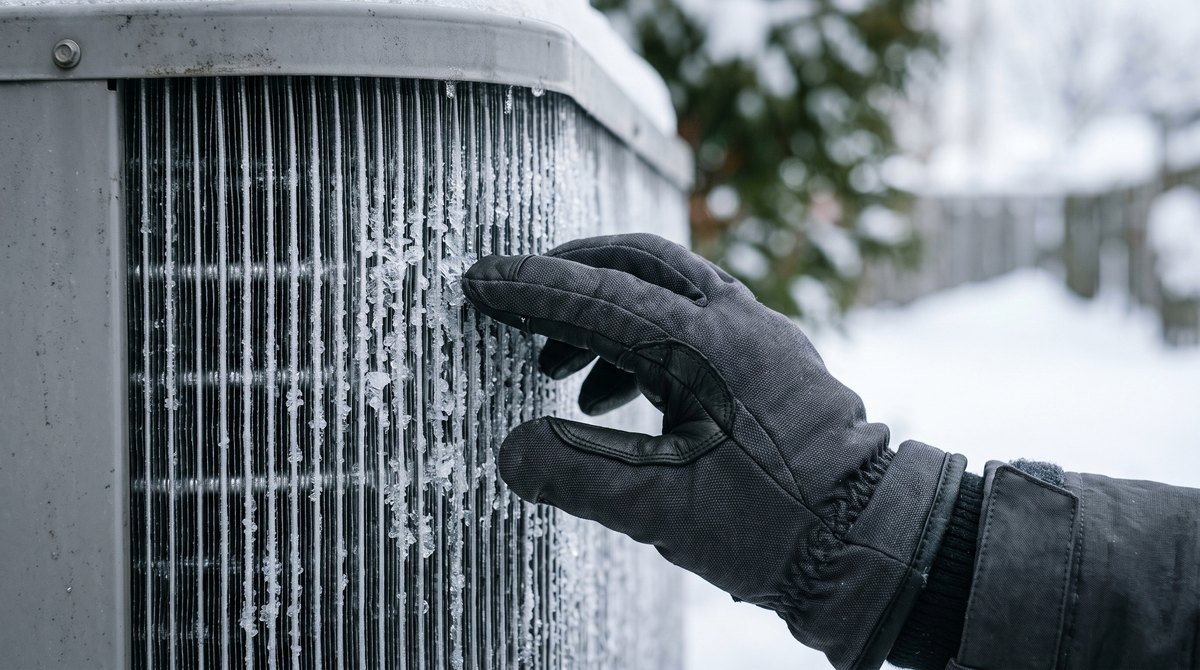
Here’s what happens next, according to the Department of Energy’s guide for heat pump owners:
- The heat pump switches to cooling mode for a few minutes, sending warm refrigerant to the outdoor coil to melt the ice.
- The fans may stop or slow down. The outdoor fan usually stops completely.
- Backup heat may come on inside, so you don’t get a blast of cold air.
- Defrost typically takes 5 to 15 minutes.
You’ll often see steam rising off the outdoor unit and hear a whoosh when it switches over. Both are normal. Melted ice also drips from the unit, so make sure it doesn’t pool and freeze on a walkway.
If your heat pump is blowing cold air during every defrost and the backup heat never comes on, the backup heat may not be set up or working. That’s worth a service call, especially before a hard freeze.
How often Houston gets cold enough for this
Not often, which is why a heat pump not heating catches people off guard here. We went through ten years of hourly National Weather Service readings at Bush Intercontinental Airport to see how often it gets cold enough for frost to form on the outdoor coil.
An average Houston winter has about 217 hours below 40 degrees and about 47 hours below freezing. That’s only around 2.4 percent of the year below 40.
But look at how much it changes. The winter of 2019-20 had 4 hours below freezing. 2017-18 had 97. In February 2021, it dropped to about 13 degrees. Some winters give a heat pump very little cold weather to deal with. Others bring days of it in a row.
Why Houston cold fronts can expose heat pump problems
Houston weather can turn quickly. A heat pump that kept the house comfortable yesterday can struggle when a strong cold front brings cold, damp air overnight. Frost builds up on the outdoor coil, the defrost cycle runs more often, and the backup heat may be asked to help for the first time in months.
That’s when weak backup heat, a bad defrost sensor or a low refrigerant charge tends to show up. Before you assume the heat pump has failed, check the filter and the thermostat settings. If the house still can’t hold your setting, a breaker trips again, or heavy ice stays on the outdoor unit, it’s time for a service call.
January is the month that tests a heat pump
January is when Houston heat pumps work hardest
Average hours per month below freezing, and between 32 and 40 degrees. Frost depends on humidity and the coil, not just temperature, so these hours show when frost is possible, not how often a given system defrosts. National Weather Service hourly readings at Bush Intercontinental Airport, 2016 to 2025, from the Iowa Environmental Mesonet.
Below 32°32° to 40°
January averages about 95 hours below 40 degrees, more than November, December and March combined. November and March each average less than one hour below freezing, too small to label. Most January hours are just above freezing, when frost can form on the outdoor coil on a damp morning.
The takeaway: the best time to find out your heat pump has a problem is November, not the first night it drops below freezing. A maintenance visit each fall includes a heating check, and our fall HVAC checklist covers what to do before the first cold night.
Heat pump not heating? Checks you can make yourself
These take a few minutes, and they solve more calls than you’d think.
| Check | What to do | Why it matters |
|---|---|---|
| Thermostat mode | Set it to HEAT, not COOL or AUTO, and at least three degrees above the room. | If it’s in COOL, the heat pump will happily cool the house. |
| Fan setting | Set the fan to AUTO, not ON. | With the fan on ON, it keeps blowing between heating cycles, and that air feels cold. |
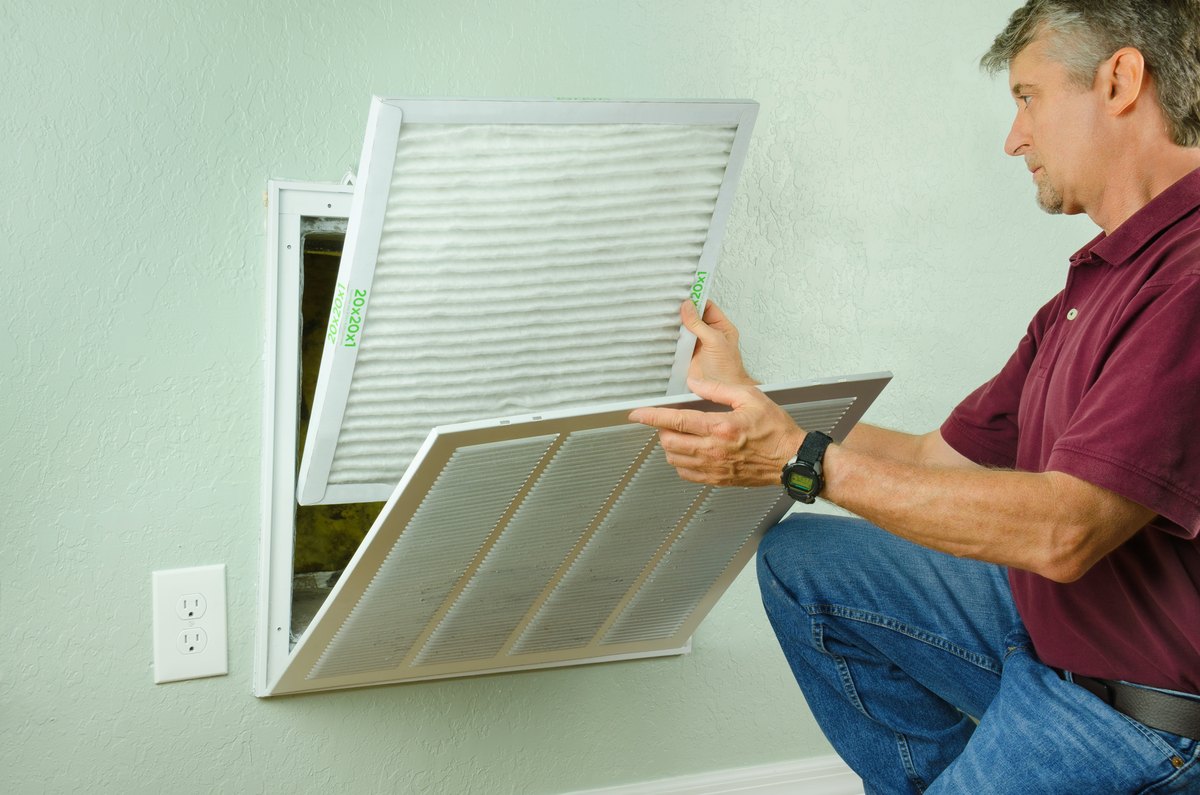
| Air filter | Pull it out and look. If you can’t see light through it, replace it. | A clogged filter cuts airflow, so less heat reaches the rooms. |
| Breakers | A heat pump usually has two: one for the outdoor unit and one for the indoor unit. Check both. If one trips again, leave it off and call. | The outdoor unit can be off while the indoor fan still runs, blowing room-temperature air. |
| Outdoor unit | Go outside. Is the fan on top spinning? Is the unit clear of leaves, plants and anything leaning on it? | If the outdoor unit isn’t running, you’re only getting backup heat, or none at all. Keep in mind the outdoor fan can stop for a few minutes during a normal defrost cycle. |
| Vents and returns | Open the supply vents and move furniture off the return grilles. | Blocked air makes the system work harder and heat less. |
After you change anything, give it ten minutes. Many systems have a built-in delay before the outdoor unit starts again. If the screen on your thermostat is blank or it won’t respond, see thermostat not working.
ENERGY STAR also says heat pumps work best with clean filters. In a Houston house, where the same system runs cooling most of the year, that filter gets dirty faster than people expect.
When to stop troubleshooting and call
Homeowners can safely check the thermostat settings, replace a filter they can reach, and clear leaves and loose debris from around the outdoor unit. Leave refrigerant, electrical parts and anything inside the units to a licensed technician.
Stop and call if:
- A breaker trips again after you reset it.
- You smell something burning or electrical. Turn the system off at the thermostat first. Our heater smells like burning guide explains which smells are normal.
- The outdoor unit stays covered in heavy ice.
- The house keeps losing heat even with the thermostat set correctly.
Problems that need a technician
If the checks above didn’t fix it, these are the problems we find most often when a heat pump is not heating.
- A stuck reversing valve. This is the part that switches a heat pump between heating and cooling. When it sticks in cooling, the heat pump blows cold air in heat mode and works fine all summer. More on how it works in our heat pump vs. AC guide.
- A thermostat set up wrong. After a new thermostat goes in, the wrong system type or the wrong O/B setting makes a heat pump cool when you ask for heat. Our thermostat not working page explains the setting.
- Low refrigerant. A heat pump uses the same refrigerant to heat and cool. Low refrigerant usually means a leak or an incorrect refrigerant charge. A technician should find and fix the cause, not just top it off.
- An outdoor unit that won’t start. A failed capacitor or contactor is common. The indoor fan runs, but the outdoor unit sits still.
- Defrost problems. A bad defrost sensor or control board means the coil never gets cleared, and ice can build up across the outdoor unit.
- Backup heat that doesn’t work. Heat strips and their breakers can fail and go unnoticed for years in Houston, because the heat pump handles most winter days on its own.
All of these involve electrical parts or refrigerant, so they’re jobs for a licensed technician. If your system has other symptoms too, our heater not working guide covers furnaces and heat strips, and our heater repair page covers what a heating repair visit includes.
When your heat pump can’t keep up in a cold snap
A heat pump makes less heat the colder it gets outside, while the house loses heat faster. On most Houston winter days, that’s no problem. On the few really cold nights, the heat pump may struggle to keep up, and the backup heat helps it catch up.
That’s what AUX on your thermostat means: the backup heat is running along with the heat pump. On a cold morning, that’s normal. It’s also normal for the heat pump to run for long stretches when it’s in the 30s outside.
A few things to know:
- Raise the temperature a degree or two at a time. On many thermostats, a big jump brings on the backup heat, which uses a lot more electricity.
- Use EM HEAT only when the heat pump has stopped working. Emergency heat shuts the heat pump off and runs only the backup heat. It’s a temporary option until the system is repaired, not something to use on every cold night, and not every system has it. Our heat pumps page explains why.
- Frequent AUX in mild weather deserves a look. If backup heat runs often when it’s in the 50s outside and you haven’t made a big change on the thermostat, the system may need an inspection. The heat pump may not be keeping up, or the thermostat may be wired or set up wrong.
If your heat pump runs nonstop on a mild day and the house still won’t warm up, that’s a heat pump not heating properly. It may have a problem rather than simply working harder, so call.
How long should a heat pump take to heat your home?
Longer than a gas furnace. A heat pump warms the house gradually, and how fast it gets there depends on how cold it is outside, how well the house is insulated, the size of the system and how far the thermostat is from the room temperature. A drafty house or a thin layer of attic insulation makes it slower.
So don’t time it by the minute. Watch the temperature on the thermostat. It should climb steadily. If the heat pump runs for a long time and the reading doesn’t move, or it keeps dropping, there may be an airflow, equipment or thermostat problem. That’s also why small changes on the thermostat work better than big ones.
Ice on the outdoor unit: what’s normal
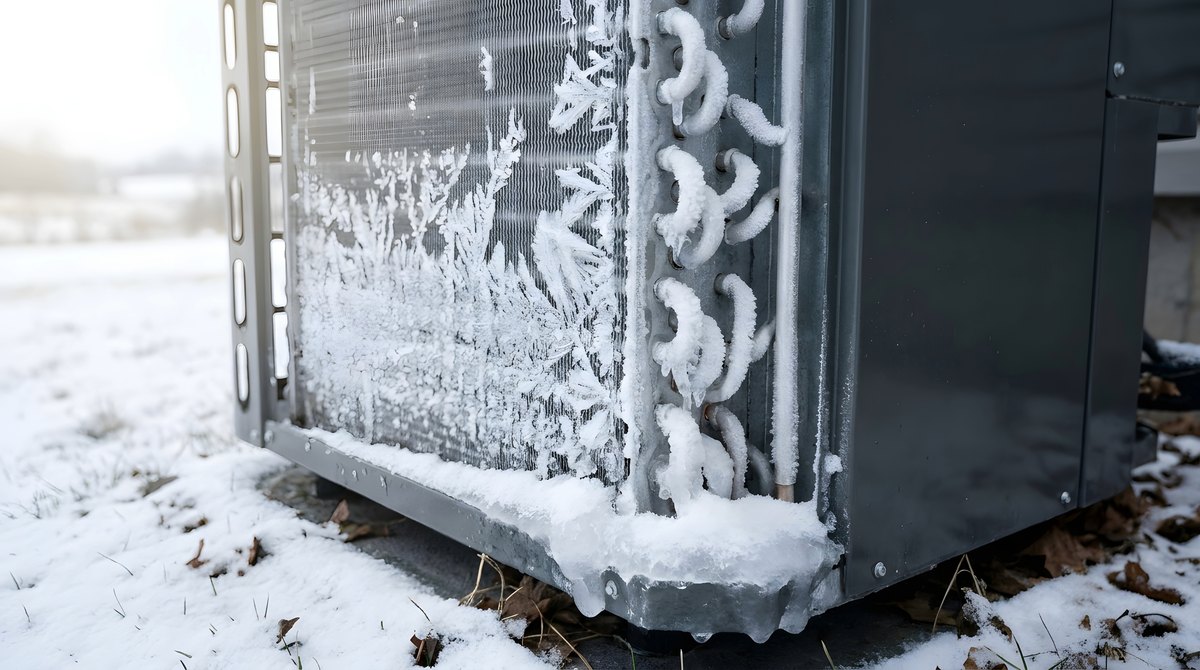
A thin layer of frost on the coil on a cold, damp morning is normal. The defrost cycle clears it on its own.
What isn’t normal:
- Thick ice covering the whole unit, including the top.
- Ice that’s still there after a few hours of running.
- Ice on a day that isn’t cold.
- The outdoor fan running while the coil stays frozen.
The Department of Energy says to call a professional if the heat pump is stuck in defrost or covered in ice. Don’t chip at the ice with a tool. The fins and tubing behind it are thin, and a puncture means a refrigerant leak. If your system has working emergency heat, you may be able to switch to EM HEAT to keep the house warm while you wait for the repair. Not every heat pump system has it.
If it’s freezing and you have little kids, older family members or anyone with a health condition at home, a heat pump that has stopped heating is an emergency. Our guide to what counts as an HVAC emergency explains when you need immediate service and when a repair can wait.
Should you repair or replace a heat pump that won’t heat?
A heat pump that won’t heat doesn’t always need to be replaced. A lot of what stops one from heating is a single part: a thermostat, a capacitor, a contactor, a sensor or a defrost control. Those can usually be repaired.
Replacement may be worth thinking about if:
- The system is older and the repairs keep coming.
- The compressor has failed.
- It can no longer keep the house comfortable in summer or winter.
In Houston, the same heat pump does your cooling all summer, so it’s worth thinking about both seasons, not just this winter. A technician can look at the system’s age, condition, repair history and the repair itself before recommending one or the other. Our heat pump service page covers what we check, our guide to AC repair or replacement walks through the same decision for cooling, and our heater installation and replacement page explains what a replacement involves.
Where we work
Castle is based in Fulshear and covers southwest Houston, Fort Bend County, the Bay Area and the Gulf Coast. Here are some of the communities we serve most often.
What Houston homeowners say
Real homeowners, real service
Houston homeowners keep asking for our technicians by name.
Google Reviews
4.9
★★★★★
Based on 204 reviews
Frequently asked questions
Cold air and defrost
Why is my heat pump blowing cold air in heat mode?
Most often it’s one of three things. The heat pump is in a defrost cycle, which is normal and lasts a few minutes. The air is warm but feels cool because a heat pump runs cooler than a furnace. Or something is wrong, like a thermostat set up for the wrong system, a stuck reversing valve or low refrigerant. If the house isn’t holding your setting, call a technician.
How long does a heat pump defrost cycle last?
The Department of Energy says defrost typically takes 5 to 15 minutes. If it lasts much longer than that, or the outdoor unit stays covered in ice, it’s time to call.
Why is there steam coming from my heat pump?
That’s the frost on the outdoor coil melting during a defrost cycle. It’s normal, and it usually comes with the outdoor fan stopping for a few minutes. It isn’t smoke, and it doesn’t mean the unit is on fire.
Ice, AUX and emergency heat
Why is my heat pump covered in ice?
A little frost on a cold, damp morning is normal, and the defrost cycle clears it. A unit that’s solid ice and stays that way isn’t normal. It usually means the defrost controls, a sensor, the outdoor fan or the refrigerant charge has a problem. Don’t chip at the ice. Call a technician.
What does AUX heat mean on my thermostat?
AUX means the backup heat is running along with the heat pump. Most heat pumps here use electric heat strips in the indoor unit. It’s normal on cold mornings and during defrost. If AUX comes on often in mild weather when you haven’t made a big change on the thermostat, or never goes away, have it checked.
Should I switch my heat pump to emergency heat?
Only if the heat pump itself has stopped working and you’re waiting on a repair, and only if your system has working emergency heat. Not every heat pump system does. EM HEAT shuts the heat pump off and runs only the backup heat, which uses a lot more electricity. Switch it back to HEAT once the system is fixed.
Settings and when to call
Why does my heat pump run all the time when it’s cold?
On a cold day, that’s often normal. A heat pump makes less heat as it gets colder outside, so it runs longer to keep up. If it runs nonstop on a mild day, or the house still isn’t warm, something is wrong.
Can a thermostat setting make a heat pump blow cold air?
Yes. If the fan is set to ON, it keeps blowing between heating cycles, and that air feels cool. After a new thermostat, the wrong system type or the wrong heat pump setting can make it cool when you want heat.
Is a heat pump not heating an emergency?
It depends on the weather and who’s at home. In a freeze, with babies, older family members or anyone with a health condition in the house, treat it as one and call right away. On a mild day, it can usually wait for a normal appointment.
Heat pump vs. AC in Texas — what AUX and EM HEAT mean, how a heat pump compares with a gas furnace, and how long one lasts in Houston.
Heat pump not heating, or still blowing cold air? Call or text (713) 667-7606 and we’ll get someone out to find out why.